The University of Alicante (UA) reaffirms its commitment to universal accessibility in its cultural spaces through new actions developed during the 2025-2026 academic year, as part of the collaboration agreement with Veolia in the Valencian Community. The latest initiatives have focused particularly on improving the technical and museographic resources of the Museum of the University of Alicante (MUA), the Paraninfo, and the Aula Magna of Philosophy and Letters, aiming to guarantee inclusive access to cultural and exhibition programming.
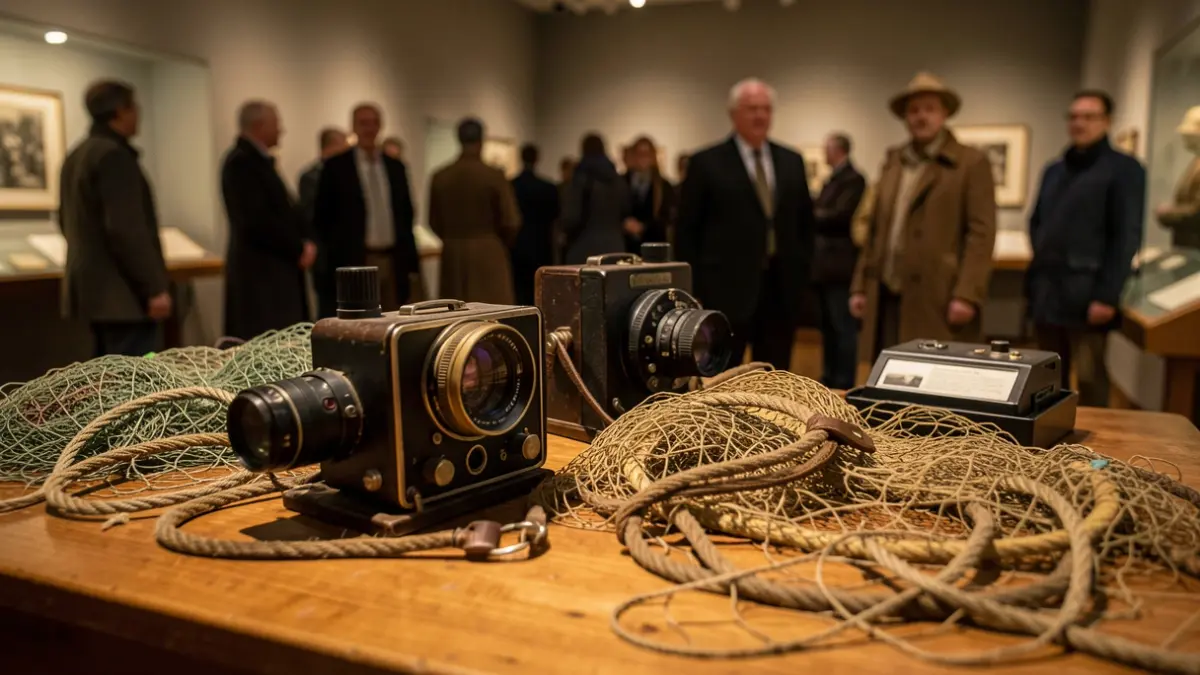
Among the most recent initiatives is the incorporation of a subtitling bar for the Paraninfo's cultural programming and the acquisition of infrared language receivers for the Aula Magna of the Faculty of Philosophy and Letters. Furthermore, the MUA's exhibition resources have been renewed with new accessible display cases, designed with an adapted height and sufficient space to facilitate approach for wheelchair users.
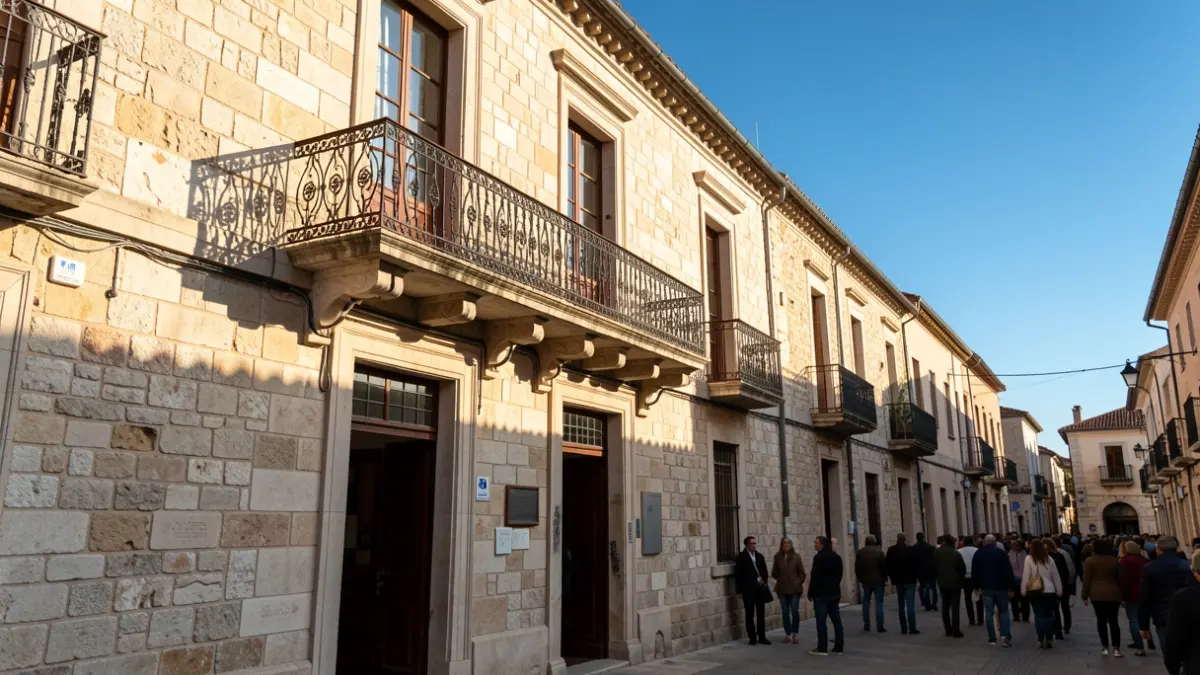
On Monday morning, the Vice-Rector for Culture, Sport, and University Extension, Catalina Iliescu, accompanied by the Director of Communication and Institutional Relations of Veolia in the Valencian Community, Martín Sanz, conducted a tour for the media to present the implemented innovations in the three campus locations.
“"It is a pleasure to continue the collaboration with Veolia in the Valencian Community, an entity with which we have been working for five years and thanks to which we can implement measures like those we present today, as it allows us to take giant steps in accessibility and the inclusion of people in culture."
“"An impeccable model of public-private collaboration. We work to reinforce our commitment to talent, education, and technological innovation, and together with the University of Alicante, we achieve being an example of this. From Veolia in the Valencian Community, we also commit to implementing social action measures, and together with the UA, we make them tangible elements."
The actions presented today to the press continue those developed during the 2024-2025 academic year, focused on improving the physical, sensory, and cognitive accessibility of university cultural activities and exhibitions. During that period, an FM transmission system was added to the Paraninfo to enhance the experience for people with hearing impairments during scheduled performances and activities. New folding chairs were also provided in various exhibition rooms of the MUA to facilitate rest for visitors.
In terms of cognitive accessibility, the MUA developed various easy-read resources and pictograms for the archaeological exhibition of La Alcudia at the MUA, adapted and validated by specialized professionals to facilitate content comprehension for audiences with specific adaptation needs. Graphic materials were also created for the exhibition Al Filo del Agua, organized within the framework of the La Alcudia Classical Theatre Festival, focusing on the importance of water in the ancient Iberian-Roman city of Ilici.
The agreement also allowed for strengthening the linguistic accessibility of the museum's exhibition content through the review and adaptation of translations into German and English of various MUA materials, accessible via QR codes installed in the rooms.
These actions are in addition to those developed in previous years, when the University of Alicante promoted a wide program of inclusive initiatives in its cultural spaces. These included the renovation of the MUA's accessible signage with new QR codes featuring braille and NFC technology, as well as the translation of exhibition panels and web content into different languages. During that period, the immersive multisensory installation Después del Fin by the UA was also launched, a proposal conceived as an accessible and immersive space, reflecting on the future of the university ecosystem and contemporary environmental challenges.
Furthermore, the MUA incorporated manipulable ceramic pieces inspired by the sculptures of Arcadi Blasco to enhance the tactile experience for visually impaired individuals, along with an adapted table for wheelchair users in the Espai Arcadi Blasco. The programs also included awareness activities on universal accessibility within the initiative “Diumenges al MUA” (Sundays at the MUA), as well as sign language interpretation services for cultural activities held at the Paraninfo.
With this set of actions, the University of Alicante reinforces its commitment to open, inclusive, and accessible culture for all citizens and reaffirms its dedication to accessibility as a fundamental pillar of its cultural and museum programming, further corroborating its collaboration with Veolia in the Valencian Community.