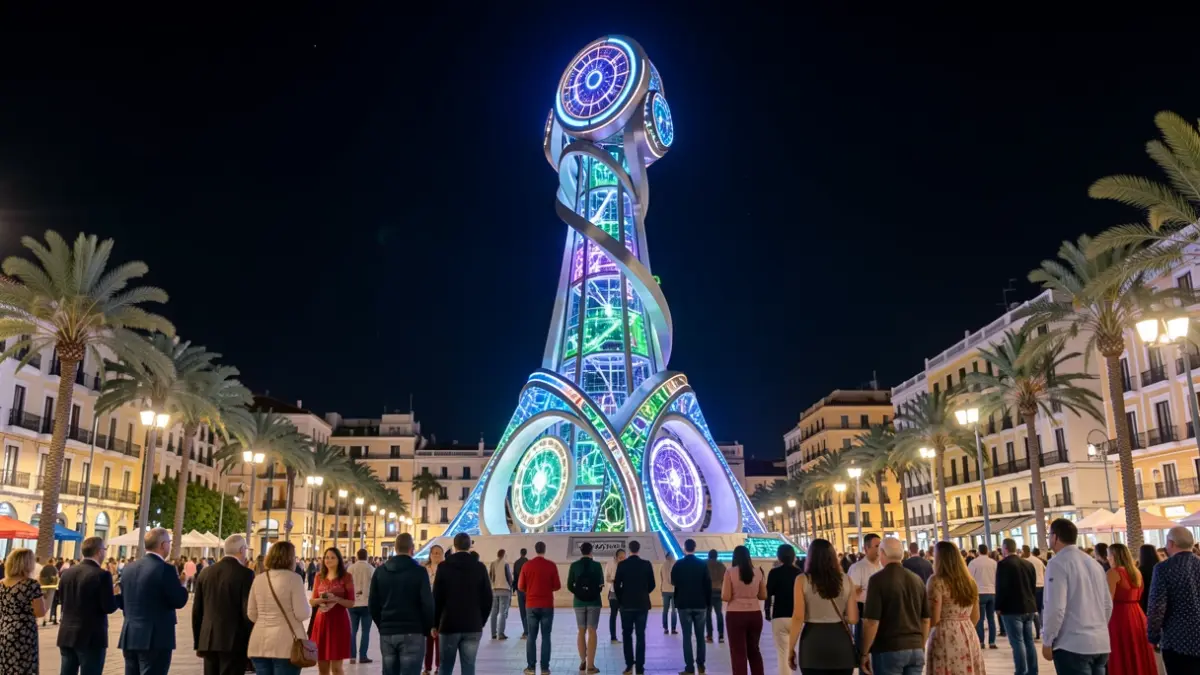
The ninth edition of Digital Tourist has consolidated the debate on the state of technology applied to the tourism sector. With Benidorm as its epicenter, the conference served to understand where destinations and companies are heading in the great challenge of qualitative data and governance. In the field of application, the management of flows and the role played by Destination Management Organizations (DMOs) have stood out.
Although the approach has a strong technological character, the creation of platforms or experiences such as digital twins has addressed one of the concerns faced by small, medium, and large municipalities. This is the case of saturation that occurs at certain times in places such as historic centers, around monuments, and, of course, beaches or coves with difficult access.
“"Our business 'core' is the platform and integrations, because the group's origin is in the water sector. What we present in tourism is what can be done with these indicators to work in real time."
In this field, mobile-based sensors or camera installations have become one of the most demanded tools. A company from Castellón, which has worked in locations such as Benidorm or Altea and currently in the city of Valencia, has a flow solution that passively detects mobile terminals and the information they provide without connecting to Wi-Fi, using Bluetooth and Wi-Fi sensors.
To enrich this data, the arrival of a third technology is anticipated: cameras with artificial intelligence software that count people without storing images. This technology is also capable of counting cars in parking lots or access points to beaches and coves. From there, alerts and notifications are configured for municipal technicians, allowing them to manage the saturations that concern administrations and can project a negative image.
On another level, the role of Destination Management Organizations (DMOs) stands out. The manager of Visit Benidorm has highlighted the important role played by the Smart City platform in unforeseen situations, such as last year's blackout or the pandemic. Benidorm has developed a digital twin with which it can test and simulate scenarios, such as climate emergencies, allowing informational signs to be displayed at pedestrian tourist access points for visitors not connected to local public channels.
Within the digital innovation ecosystem, Benidorm has become a pilot destination within the Intelligent Destinations Platform (PID), the foundation on which Segittur has been working for two years. This platform is intended to serve as the major technological and management server for municipalities in Spain. A councilor for Innovation has described the PID as “a strategic opportunity to further advance towards a more connected, interoperable, and data-oriented tourism management”.