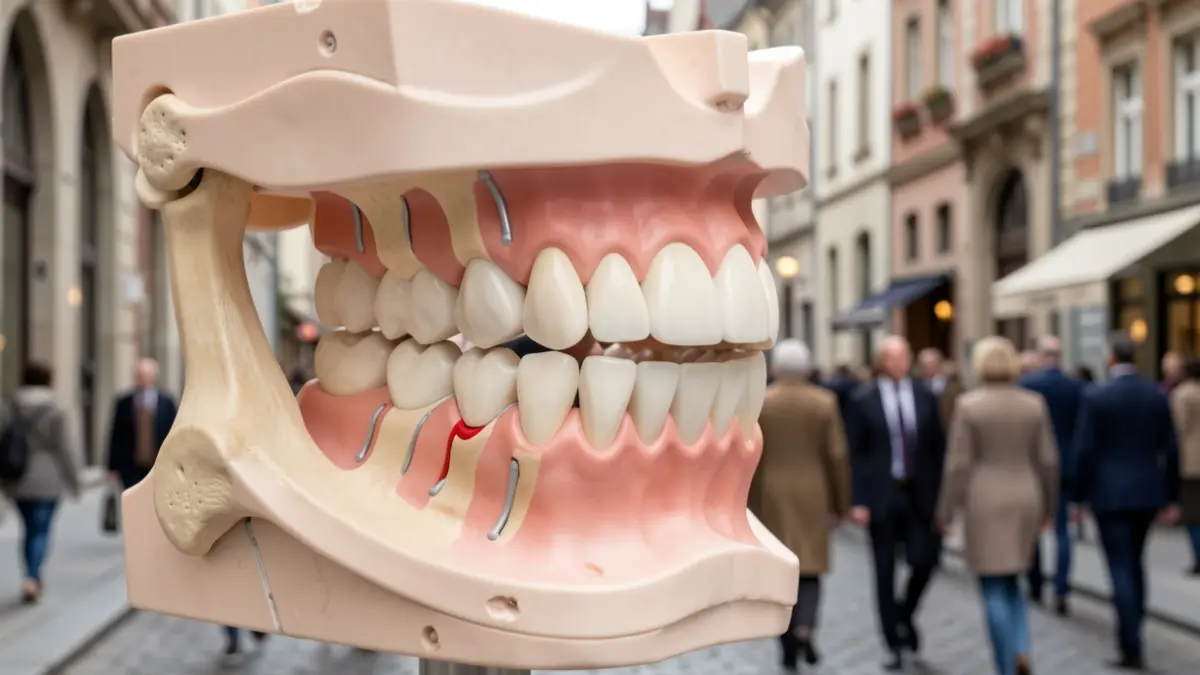
Orthognathic surgery is a surgical technique used to correct the improper position of the jawbones. As explained by Dr. Javier Mareque, a maxillofacial surgery specialist at Clínica Corachan, this intervention "is prescribed when orthodontics cannot correct a bad bite solely with its techniques and it is necessary to move the bone bases to achieve proper alignment." He adds, "some patients undergo this surgery to treat sleep apnea, as mobilizing the jaws increases the airway's diameter, which helps reduce snoring and apneas."
A third reason for performing orthognathic surgery "is the involvement of the temporomandibular joint, damaged after years of a bad bite," details Dr. Mareque. The specialist from Clínica Corachan further notes that "aesthetics is another reason why some patients with correct occlusion opt for this surgery, for aesthetic reasons, to modify facial projection or achieve a more youthful appearance."
This surgery is performed by the oral and maxillofacial surgery specialty, in collaboration with an orthodontist. Up to 30% of the population has some type of malocclusion treatable with surgery, but the intervention is only indicated when symptoms, sleep apnea, or a clear aesthetic motivation are present. In some cases, the aesthetic motivation will predominate, while in others, it is primarily functional, such as with apnea or temporomandibular joint pathology.
According to Dr. Josep Rubio, another maxillofacial surgery specialist at Clínica Corachan, "in our region, the most frequent orthognathic intervention is to correct a retruded chin - cases known as 'class II with retrognathia' - a malocclusion, and in many cases, snoring and apnea problems.
Most of these problems or malformations, "Dr. Rubio specifies, "have a genetic origin, and it is common to find several cases within the same family, with small jaws." In addition to congenital issues, there are those due to improper development during growth, and a third group appears due to wear over a lifetime.
Most of these problems or malformations, "Dr. Rubio specifies, "have a genetic origin, and it is common to find several cases within the same family, with small jaws." In addition to congenital issues, there are those due to improper development during growth, and a third group appears due to wear over a lifetime.
The procedure, performed under general anesthesia, lasts between one and two hours, depending on whether both jaws are mobilized (which occurs in 80% of cases) or only one. The patient stays one night in the hospital, followed by outpatient follow-up. It may be extended if other procedures are associated, such as mentoplasty, rhinoplasty, wisdom tooth extraction, or implant placement. In aesthetic cases, it can also be combined with fat injections or buccal fat pad removal.
The average recovery time for social and professional reintegration is about 14 days. During this period, there are dietary restrictions, with pureed food, and contact sports must be avoided. Otherwise, the patient can resume normal life. In some cases, when the surgery is performed at a young age, subsequent growth may require some adjustments in adulthood.
Untreated malocclusions can lead to dental overload and, over time, tooth loss. They can also affect the temporomandibular joint. In the case of sleep apnea, they are associated with metabolic deterioration, increased risk of hypertension, daytime sleepiness, and other symptoms. The intervention can be performed from adolescence and at any stage of adult life, although patients seeking an aesthetic or rejuvenating effect usually do so in their fifth or sixth decade, and in severe apnea cases, at older ages. Most undergo surgery between 15 and 30 years old.