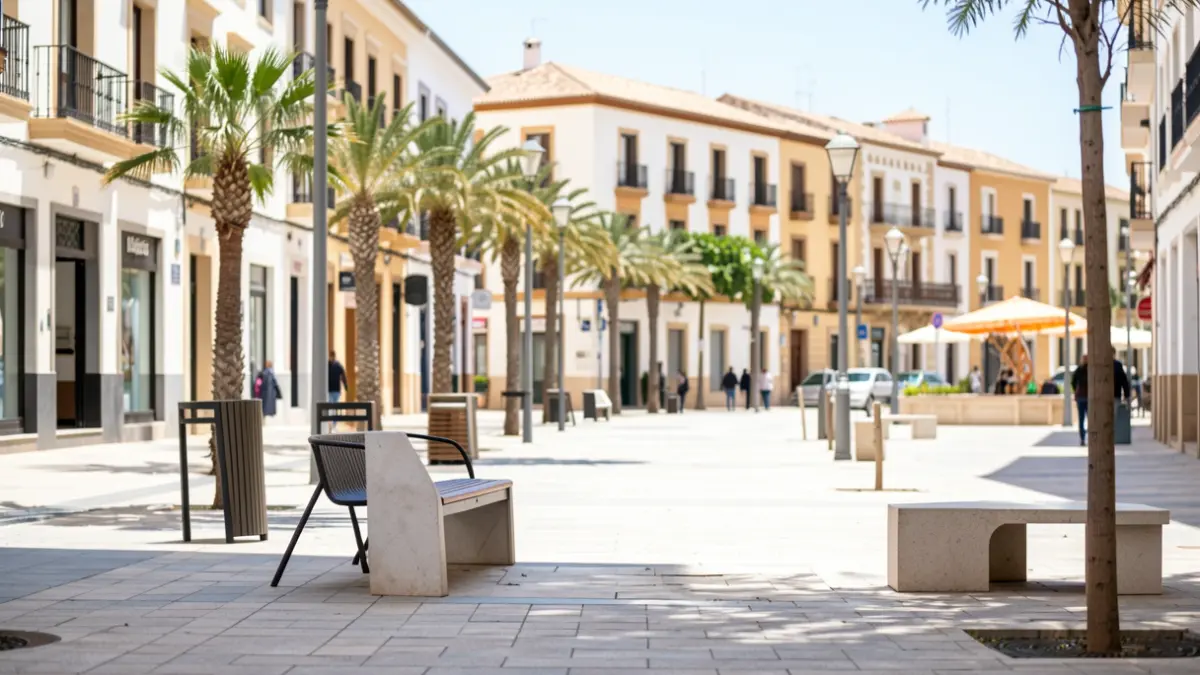
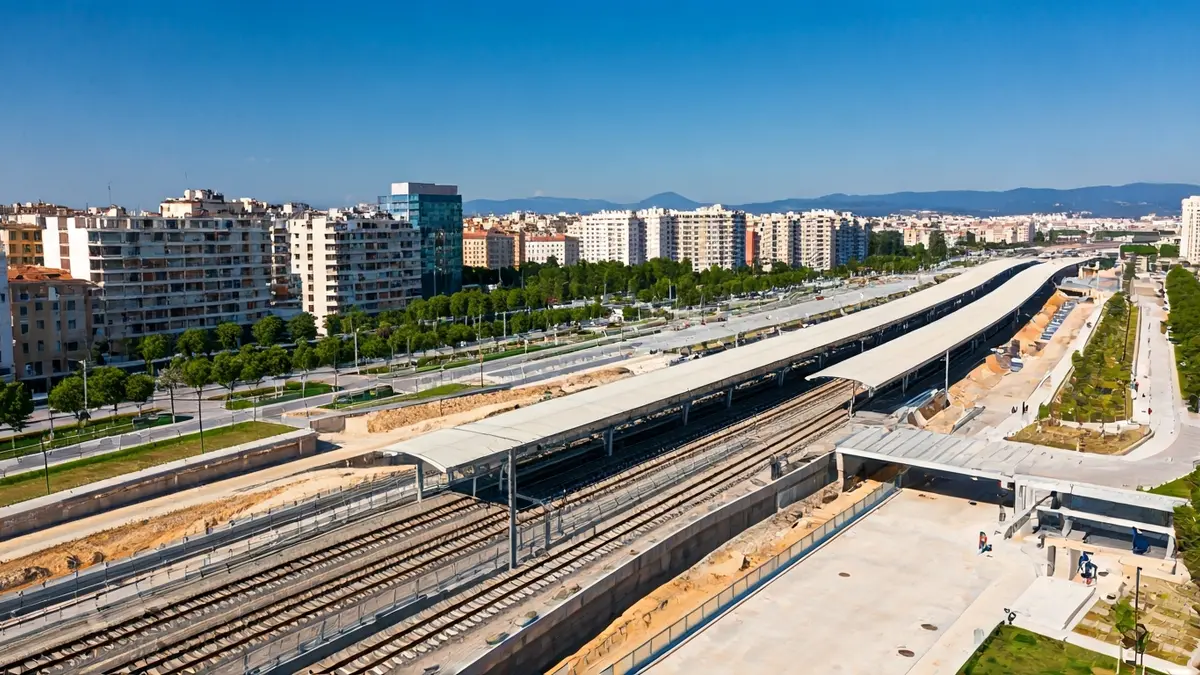
The Parc Central project, with a definitive design and a clear roadmap, seeks to convert the current railway yard into a green engine for the Alicante capital. This urban initiative aims to return to the citizens a space that for decades has functioned as an insurmountable border between neighborhoods, transforming what the Government defines as an “urban scar”.
The new Parc Central is not just a large-scale landscaping project, but a complex technical reorganization supported by seven strategic agreements between administrations. The cornerstone of the project is the covering of the tracks while maintaining their current level, which allows the surface to be freed up for public use without interrupting railway traffic. The design contemplates the relocation of building density towards the edges of the park to prevent buildings from enclosing the green space, in addition to an ambitious reorganization of perimeter road traffic. One of the most symbolic points will be the renovation of the emblematic Red Bridge, whose central structure will remain integrated into the new landscape, eliminating the ends that currently act as visual and physical barriers.
The transformation also highlights the city's historical heritage. The train station will be located at the southern access to the park, recovering its original image and consolidating itself as one of the terminals with the largest capacity in the Spanish network, with 14 tracks ready to absorb the growth of the Mediterranean Corridor. This strategic hub will be the foundation upon which all commercial and transport activity in the area will be supported, ensuring that Alicante reinforces its role as a mobility benchmark in the Valencian Community.
As a complement to this work, the Generalitat Valenciana has confirmed its active participation through the integration of regional infrastructure into the park's subsoil. The Valencian executive has announced that it will replace the projected surface parking with an underground one, a measure that will free up even more space for the development of green areas. This action will be carried out simultaneously with the works of the Central and Intermodal Station of the TRAM d’Alacant, whose investment by the Generalitat amounts to 102 million euros.
The Consell's objective is for this intermodal station, which will connect the TRAM with the railway and bus, to be completed by early 2029. Currently, work is progressing with the excavation of the tunnel that will connect with Luceros, using techniques that minimize disruption in the urban environment. This coordination between the three administrations will allow the arrival of the AVE and the expansion of metropolitan transport to align perfectly with the design of the Parc Central, ensuring that the social and economic investment in Alicante has a direct return on the quality of life of its residents.