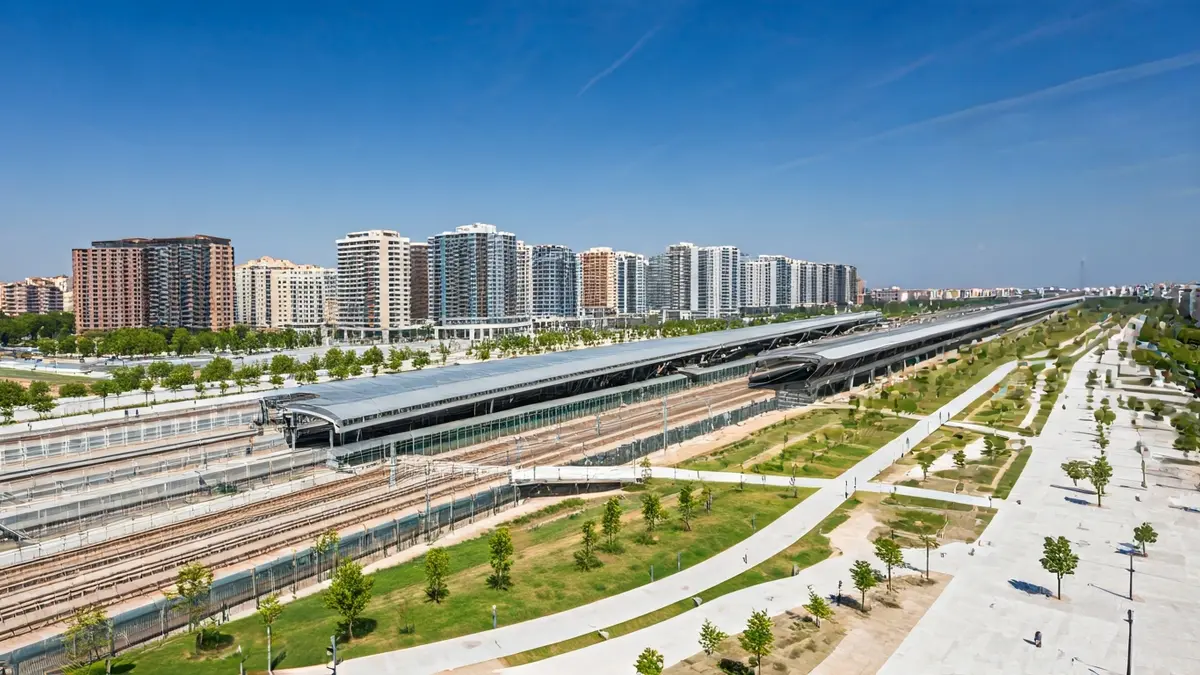
The proposal seeks to end the urban division that train tracks have caused for decades, opening a new stage of transformation for the city. This action will require replacing the current surface parking with an underground one, integrated into the works of the TRAM d’Alacant Central Station, to free up space for the future Central Park and integrate the railway infrastructure into the planned urban design.
The announcement was made this Monday at an event held at the Alicante City Council, with the participation of the Minister of Transport and Sustainable Mobility, Óscar Puente, the President of the Generalitat, Juanfran Pérez Llorca, and the city's mayor, Luis Barcala. During the presentation, institutional leaders agreed to define the agreement as a «historic» moment for the urban future of Alicante.
“"What is today an urban scar will become the green lung that Alicante deserves."
The new solution announced by the Generalitat positions the TRAM d’Alacant Central-Intermodal Station as an essential piece to enable the development of the future park. The Valencian executive has framed this action within its commitment to intermodality and has highlighted an investment of 102 million euros in this infrastructure, designed to connect the TRAM, railway, and bus transport, with works expected to conclude by early 2029.
The design of Alicante's Central Park is not limited to the green corridor. The proposal incorporates 220,000 square meters of buildable area, which will be redistributed towards the western edge of the future park to prevent buildings from compressing the large open space planned. The current tracks will maintain their level but will be covered by elevated platforms with green areas and pedestrian paths, integrating the railway infrastructure into the new urban design.
Among the elements to be preserved in the project's development is the central structure of the Red Bridge, which will remain an identifying element of Alicante. The intervention also includes the conservation of the centenary ficus trees in the Plaza de la Estrella and the enhancement of historical buildings linked to the railway sector, with the station as the central piece of this recovery.