The Alicante Territorial College of Architects (CTAA) celebrates the recognition awarded to Alicante architect Alfredo Payá, recipient of the New Bauhaus Award: Cultural and Artistic Values. The award honors the project Service Pavilion and Pool in Tibi, part of the 2026 Architecture Awards presented annually by the Superior Council of Colleges of Architects of Spain (CSCAE).
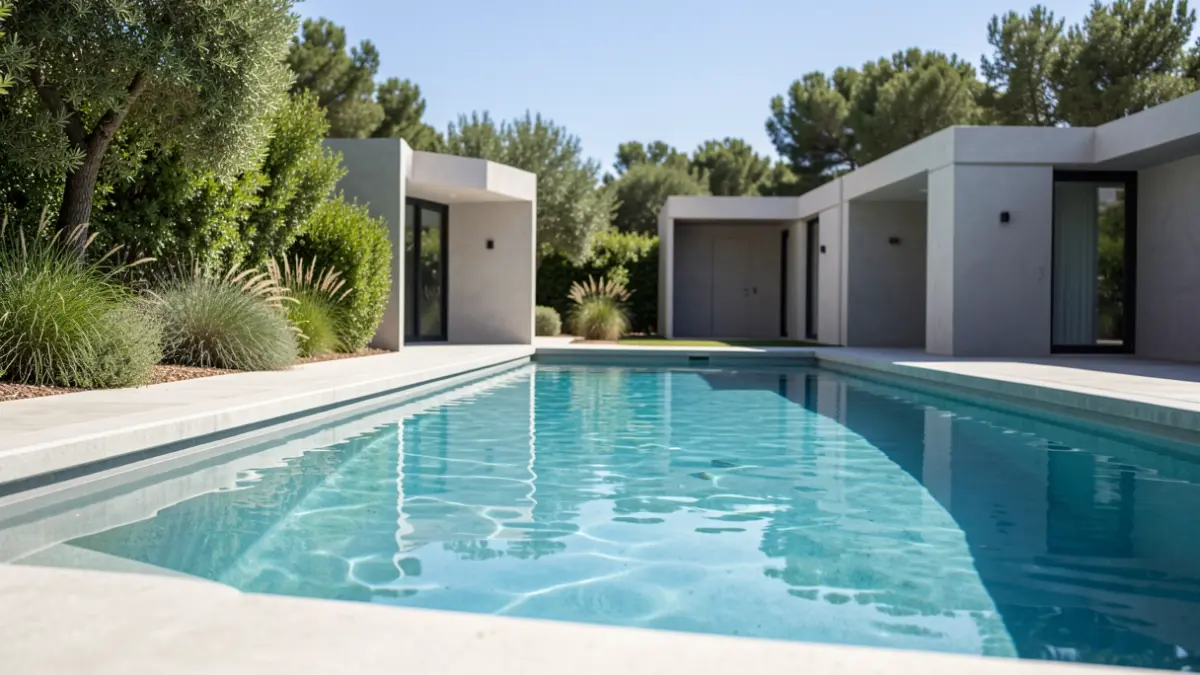
These awards aim to recognize the quality, commitment, and cultural, social, and environmental contribution of architecture. The awarded project involves the construction of a swimming pool and a small service area supporting both the pool and the main house, as part of an expansion of the primary structure named Planet Blanc.
The proposal is notable for establishing a symbiosis between architecture and nature, valuing the elements that shape the landscape. The project draws on topography, geometry, vegetation, and materials to create a shared-use space where water, shade, and pathways define a spatial experience linking the everyday with the emotional.
The president of the CTAA, Carlos Sánchez, highlighted that this recognition "is magnificent news for Alicante's architecture and confirms the quality of work being developed in our region." He added that the project is "an example of precise, sensitive architecture deeply connected to its place, capable of integrating into the landscape without imposing upon it."
The jury praised the project's ability to integrate architecture and landscape through a precise and restrained intervention. The work utilizes sober materiality, allowing it to naturally blend with the surroundings and act as a device that organizes the site.