
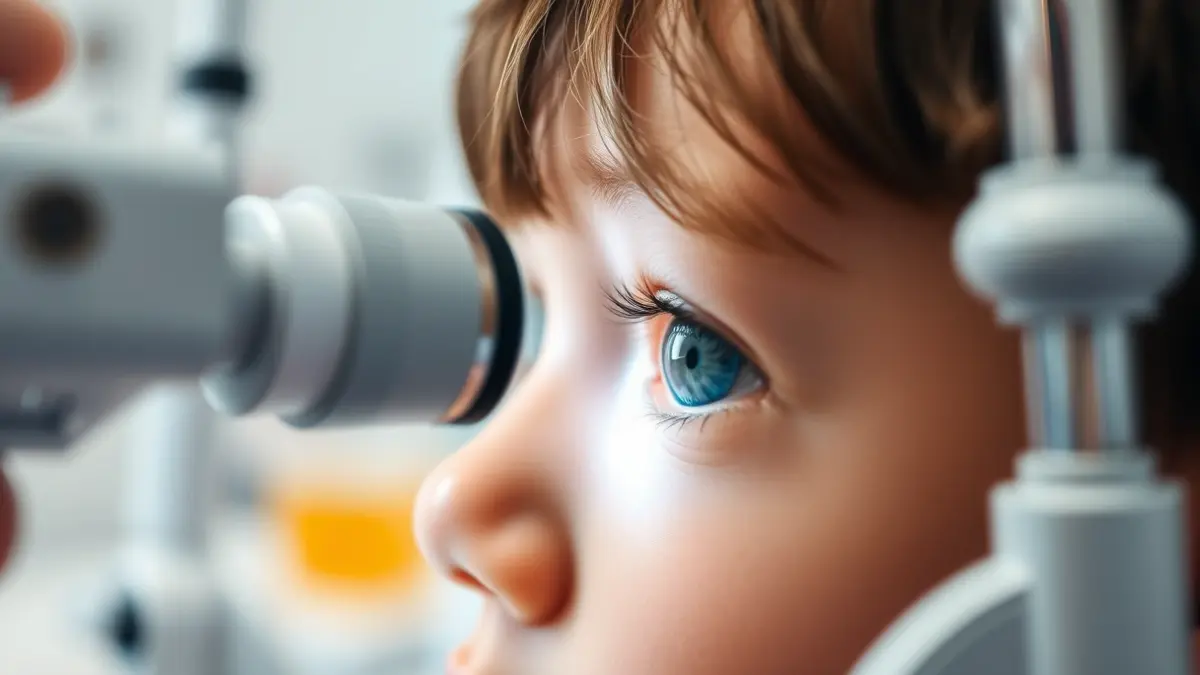
An expert from the Department of Optics, Pharmacology and Anatomy at the University of Alicante has underscored the importance of regular visual examinations, especially in younger individuals. According to this specialist, the early detection of visual alterations can prevent difficulties in daily activities and improve academic performance.
The primary problem to detect in children and young people are refractive errors, meaning focusing errors of the eye. The eye is an optical system whose elements may be more or less adjusted, and sometimes an additional correction is necessary, either with glasses or contact lenses.
Myopia, which causes difficulty focusing on distant objects, is one of the most frequent refractive errors. It is crucial to prescribe optical correction as soon as possible and, in many cases, to adopt measures to control the progression of myopia, as excessive eye elongation is associated with ocular risks. Currently, new therapies such as red light stimulation and the use of eye drops are being investigated.
Another important defect is hyperopia, where the eye's length is excessively short. This defect can vary over the years and, depending on its magnitude, may not induce a clear visual loss, but can cause fatigue and difficulty with near tasks. Optical correction is essential for the child's comfort and to prevent other medium to long-term problems.
Astigmatism, which causes variable blurring, can also be present in children and adolescents. This is easily compensated with toric lenses. In addition to refractive errors, there are functional vision anomalies that cause double vision, discomfort, and blurriness when reading up close, as well as the inability to change focus from far to near. These problems, such as convergence insufficiency, can significantly impact school development and should be ruled out before attributing academic performance issues.
In most cases, optimal optical correction and the training of various visual abilities, using specific instruments and advanced computerized systems, lead to favorable visual rehabilitation in short periods. This process is known as Visual Therapy or Orthoptics and is always based on scientific evidence.