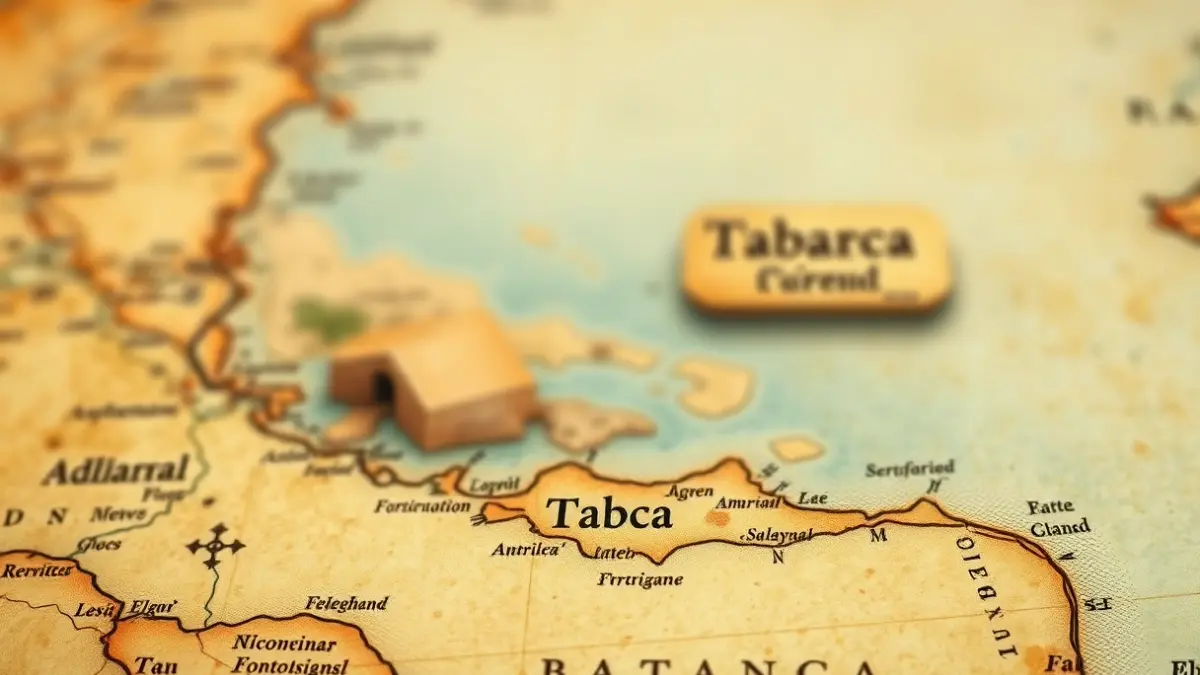
The demand by Tabarca residents for partial independence from the Alicante City Council and to be constituted as a minor local entity, if materialized, would add a new chapter to its already complex territorial history. Located eight kilometers from Santa Pola and twenty from Alicante, its insular condition has led to constant administrative and nominal ambiguity.
The earliest written references to the island date back two millennia, when the Greek geographer Strabo referred to it as Planesia. The 18th-century scholar Gregori Mayans suggested a connection to a nearby island in Marseille, Planier, or that the name meant “dangerous” due to its reefs, rather than “flat” as commonly interpreted. Later, the Romans renamed it Planaria, and the Arab geographer Al Edrisi called it Planasia in the 12th century.
From the 15th century, the island was known as “isla de Santa Pola,” a name that persisted until the 18th century, when it acquired the name Nueva Tabarca with its annexation to the municipality of Alicante. Historically, its territorial definition was linked to Elche and Santa Pola. In fact, Elche considered the island its own territory since the Christian conquest of the 13th century, exercising full dominion over it.
“"The town of Elche, from time immemorial, considers itself the owner of the island of Santa Pola, exercising full dominion over it, suffering the same effects and enjoying the same prerogatives that the town possesses over the centuries."
Evidence of this belonging to Elche is a document from 1337, in which Ramon Berenguer, son of monarch Jaume II, granted a license to the Council of the Illicitan town to build a tower on the island. By the end of the 14th century, Elche, and thus Tabarca, were sold to Barcelona by the infant Martí l'Humà to cover the economic consequences of the military campaign in Sicily. Between 1392 and 1473, the island was part of the Catalan capital, until King Juan II confiscated the town of Elche and the territory regained its previous status.
The dispute over fishing rights between Elche and Alicante around Tabarca dates back to these centuries, a conflict that can be considered the origin of the contention for the island's dominion. The definitive repopulation of Tabarca with the arrival of Genoese rescued from Tunisian Tabarka in 1770 marked its annexation to the municipality of Alicante as a district, by order of monarch Carlos III, despite Elche's claims.
The new Genoese settlers, who still retain their original surnames, settled on the island believing that their presence would protect it from pirate attacks. Thus, a settlement with houses, a church, and defensive elements like walls developed, adopting the name Nueva Tabarca. With the disappearance of the military governor in 1850, the island became more dependent on the Alicante City Council for basic services. The figure of the district mayor, established in the second half of the 19th century, was eliminated in 2015 by decision of the Alicante City Council, which led to the creation of a neighborhood association to maintain communication with the council.