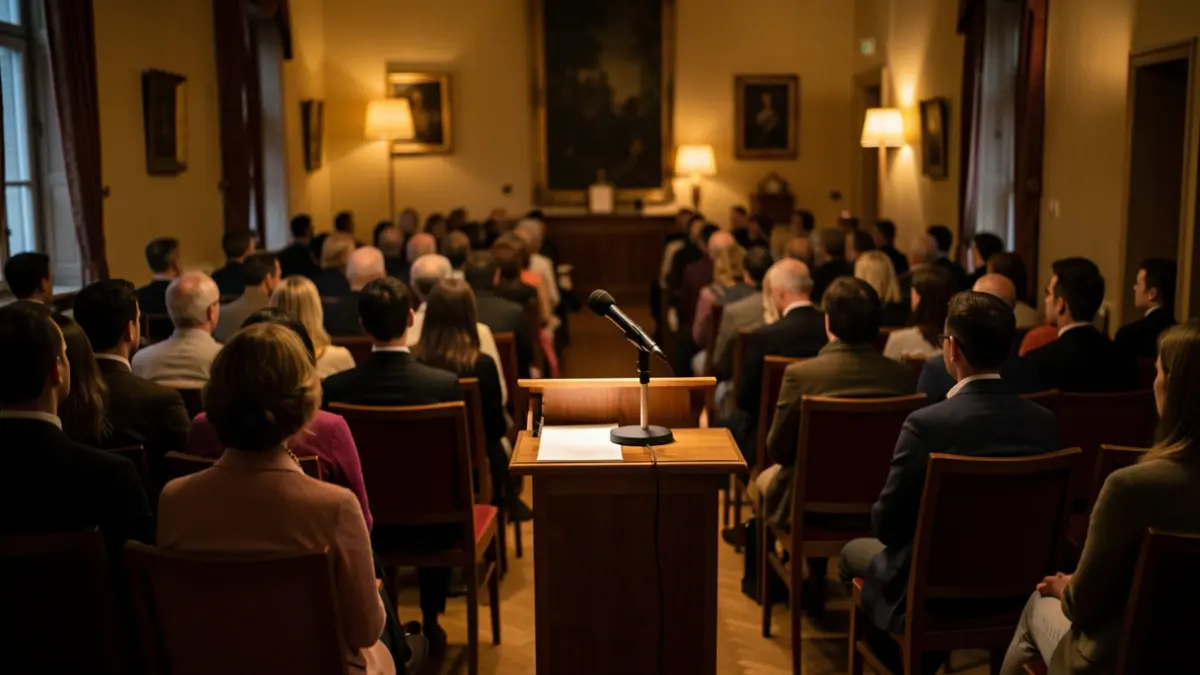
The presentation of the essay "La delgada línea entre la locura y la creatividad", written by Clara Peñalver and Javi S. Burgos and published by Binomio Editorial, gathered dozens of people at the Centro Aragonés in Port de Sagunt. The event, promoted by the Sapiencia association, turned into a lively debate on the relationship between creative processes and mental health.
The work explores the fine line between creativity and mental health, a topic that prompted a necessary discussion in a social context where it is still difficult to speak openly about what affects us internally. This approach connects with the work that Sapiencia carries out regarding mental health and critical dissemination.
The session was hosted by Avelino Vicente and Guillermo Peris, who facilitated a close dialogue between the audience and the authors, exploring a territory where imagination is both risk and survival.
Clara Peñalver, a Biology graduate, is the author of the Ada Levy series and children's books on creativity. Javi S. Burgos, a Doctor of Molecular Biology, has dedicated his career to Alzheimer's research.
Both authors agreed that the book does not offer closed answers, but rather urgent questions to break silences. This direct approach resonated with the audience, who raised issues about neurodivergence, historical stigma, and the particularities of creative processes.
The Sapiencia Association highlighted its commitment to participation to strengthen the region's cultural community and place critical thinking at the center of social life in the Camp de Morvedre region.
The presentation concluded with the idea that the work is an invitation to look in the mirror without fear, recognizing that all people walk on fine lines, a fact that makes us more human.