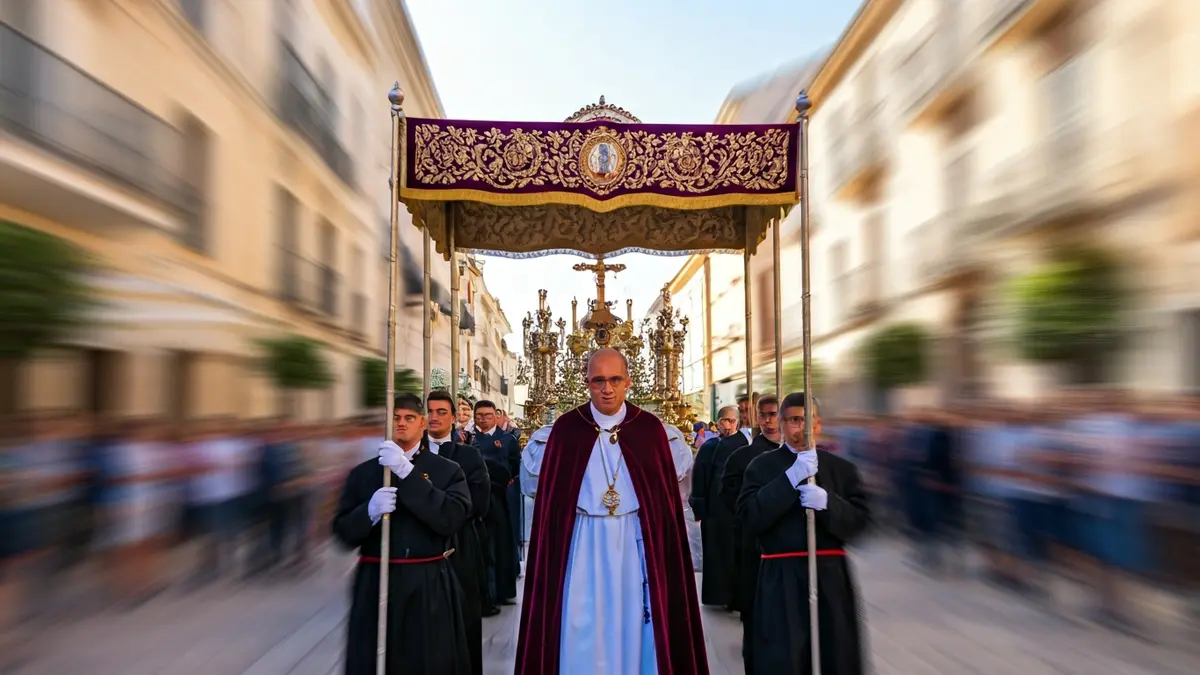
This Monday, despite a cool breeze, the day was festive in towns such as Albatera, Algorfa, Benijófar, Bigastro, Callosa de Segura, Daya Vieja, Jacarilla, and Torrevieja. The celebration includes religious acts and popular festivities that keep alive a tradition of great cultural and religious importance in the region.
In Callosa de Segura, residents participated in the procession accompanying Jesus Sacramentado under a canopy to the convent, in the Glorieta garden. The torchbearers, exclusively male, formed the procession, with children dressed as altar boys ringing their bells. This procession commemorates the transfer of communion to the old municipal hospital, located in the Carmelite sisters' convent since Mendizábal's disentailment in the 19th century until the late 70s of the last century, as explained by the chronicler of Callosa de Segura, Miguel Martínez Aparicio.
The Eucharistic procession of Callosa de Segura, which brings together several generations from grandparents to grandchildren, is one of the religious and popular identity marks of the municipality. It was presided over by the Municipal Corporation, led by the mayor, Amparo Serrano, and other authorities. The standard-bearer knight, Juan Antonio López Samper, carried the maroon parish banner, while the confreres of Santa María Magdalena and Jesús del Perdón were in charge of carrying the canopy. The Sociedad Arte Musical La Filarmónica performed the Eucharistic marches.
In Torrevieja, the celebration began at 8:30 AM with a mass at the Archpriestal Temple of the Immaculate Conception. From there, the procession of the Comulgar de San Vicente Ferrer, popularly known as the “Comulgar procession,” departed with the confraternity of the Blessed Sacrament. The purpose is to administer communion to the sick and people with reduced mobility who could not attend church during Holy Week, declared of Provincial Tourist Interest. This processional parade concludes the city's cycle of passionate and devotional processions.