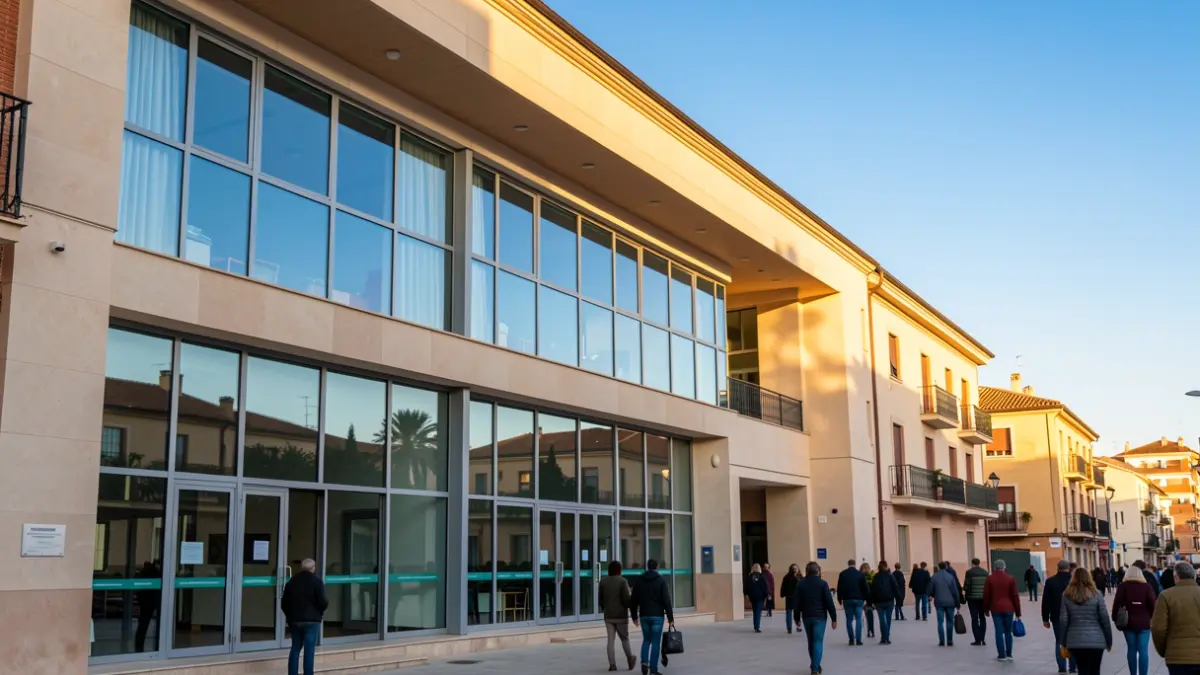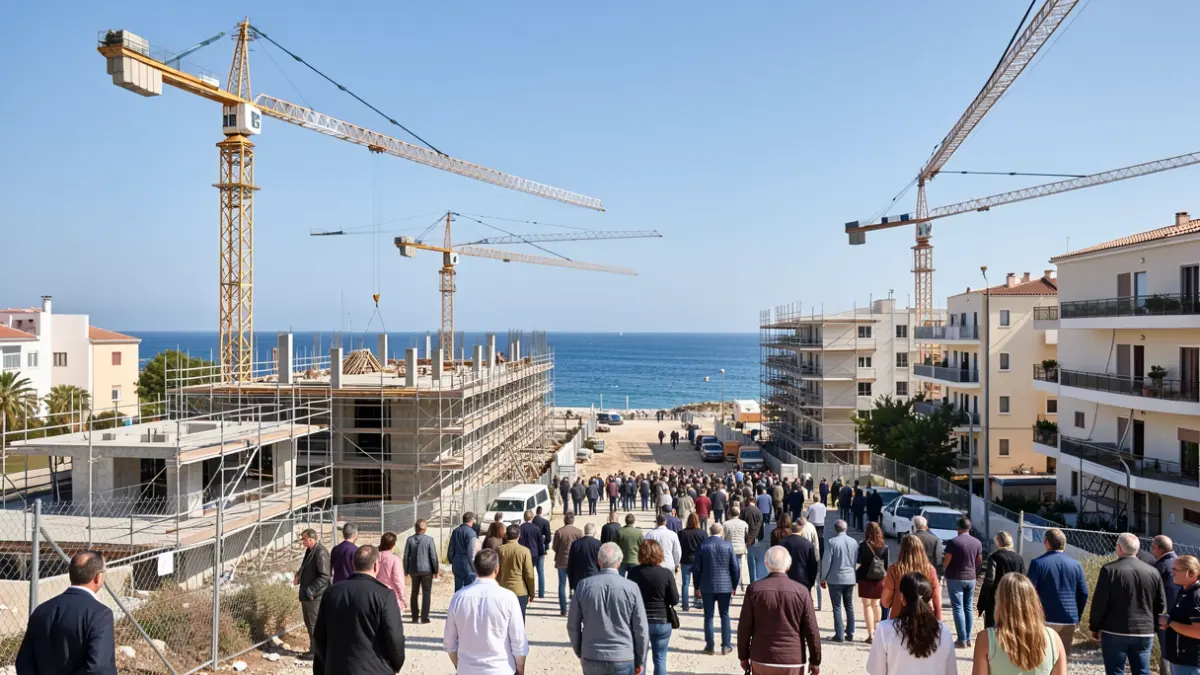
The Torrevieja City Council has taken the first step towards the construction of 822 public housing units planned for the municipality, as part of the Vive Plan. This initiative, with an investment close to 100 million euros, will be carried out on four municipal plots and represents one of the most significant residential interventions in recent decades for the city. Construction is expected to be completed and the homes delivered around 2028.
The president of the Generalitat Valenciana, Juanfran Pérez Llorca, accompanied by the first vice-president and Minister of Housing, Susana Camarero, and the mayor of Torrevieja, Eduardo Dolón, presented the plan's progress. Pérez Llorca emphasized the goal of promoting public housing in the Valencian Community, particularly for young people and those most in need.
The collaboration between the Generalitat Valenciana and the Torrevieja City Council is crucial for this project, involving the transfer of municipal land. In return, the council will receive 182 homes that will be added to the municipal public housing stock, thereby strengthening the city's housing supply.
The first development, located in La Manguilla (area of La Mata), will consist of 36 public housing units (7 of which will be for municipal ownership) distributed across buildings with one, two, and three bedrooms. This project, which has already obtained its license, will be marketed once it receives provisional qualification as public housing, expected in the coming weeks. Prices will be subject to regional regulations to ensure affordability. Subsequent developments will take place in the La Hoya sector.
The Vive Plan reserves 40% of the housing units for young people. The president highlighted other measures by the Consell to facilitate housing access, such as reduced Property Transfer Tax for young people and vulnerable groups, and the guarantee program from the Institut Valencià de Finances. The criterion of territorial rootedness has also been introduced to prioritize residents of the municipality, with a new municipal ordinance being developed to assess factors like length of residency and employment in Torrevieja.
The Generalitat has reinstated principles of equality and objectivity in the allocation of public housing through a web portal where anyone can register and access information. The new system includes mandatory publication of developments, an electronic application registry, and an independent technical commission to evaluate buyer requirements. Additionally, Torrevieja will launch a specific website ([www.planvivetorrevieja.es](http://www.planvivetorrevieja.es/)) to provide detailed information about the plan.
Juanfran Pérez Llorca stated that the housing problem will only be solved by building more homes, while respecting sustainability and eliminating bureaucracy. He advocated for new urban planning legislation that grants greater autonomy to municipalities and invited the Spanish Government to join the Vive Plan to increase public housing targets in the Valencian Community.