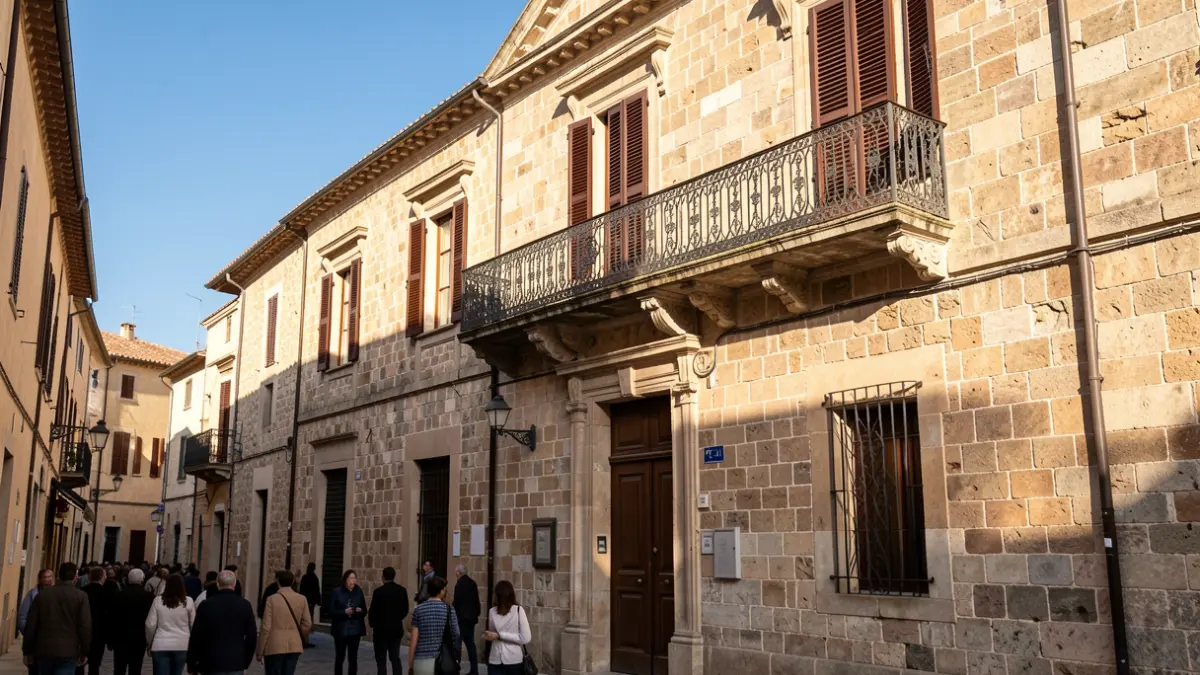
The Orihuela City Council has taken a step forward in protecting its historical and cultural heritage with a comprehensive revision of the Municipal Protection Catalog. This update represents the most significant reform of this urban planning instrument in over thirty years, expanding the safeguard of heritage assets to a total of 488 cataloged elements.
The proposal was presented at an informational session held at the Miguel Hernández Cultural Center, where the Councilor for Urban Planning and Heritage, Matías Ruiz Peñalver, along with municipal technicians and the document's drafting team, outlined the main advancements of a project aimed at adapting Orihuela's heritage protection to current regulations and a broader conception of heritage.
The revision moves away from a focus solely on singular buildings to incorporate a more global perspective that includes the cultural landscape of the orchards, hydraulic heritage, ethnological elements, modern architecture, archaeological and paleontological heritage, as well as various manifestations of intangible heritage linked to Orihuela's historical identity.
Ruiz highlighted that this is a strategic project for the municipality, serving as a fundamental tool to ensure the conservation of elements that define Orihuela's history, culture, and landscape. New additions include noble coats of arms, historical bells, cisterns, hemp vats, lime kilns, gypsum kilns, rural hermitages, traditional mills, and various elements linked to the historical hydraulic system of the orchards.
The catalog will also incorporate significant assets related to the territory's historical evolution, such as the Twin Waterwheels of Moquita and Pando, the weir and intake of the Almoradí irrigation channel, and the intake of the Alquibla channel. It will also include elements associated with historical memory and wartime heritage, such as Civil War shelters and trenches, as well as new structures linked to the Castle of Orihuela identified through work on its Master Plan.
Protection will also extend to traditional historical centers like San Isidro and its murals, as well as intangible heritage manifestations deeply rooted in the city, including the Procession of the Holy Burial, based on the premise that heritage conservation must encompass both material assets and cultural expressions that form part of collective memory.
Municipal architect Verónica Godoy explained that the catalog is an instrument integrated into urban planning that identifies, classifies, and regulates the municipality's heritage assets. She detailed that the update will provide more complete and precise individual files, along with homogeneous criteria that will offer greater legal certainty to both the administration and owners of protected properties.
Another objective of the revision is to streamline administrative procedures related to heritage. The new files will detail permitted, conditional, or incompatible actions for each protected element, facilitating the granting of licenses and reducing the need for certain sectoral reports in ordinary interventions.
In archaeological and paleontological matters, municipal archaeologist Silvia Yus highlighted the incorporation of new archaeological surveillance areas to adapt subsurface protection to the patrimonial potential of each zone. The document will establish different protection figures, including Archaeological Zones, Archaeological Protection Areas, and Archaeological Surveillance Areas, aiming to balance heritage conservation with urban development.
The drafting team recalled that the current catalog originates from the 1990 General Plan's Catalog of Protectable Elements and the 1994 Special Plan for the Historic Center's Catalog and Classification of Buildings, Ensembles, and Elements. More than three decades later, both regulations and the very concept of heritage have evolved significantly, necessitating a comprehensive update.
The new approach pays special attention to rural and ethnological heritage, particularly constructions linked to traditional orchards. Farmhouses, rural estates, mills, oil mills, hemp vats, silkworm breeding facilities, lime kilns, cisterns, and waterwheels are part of a legacy that has suffered significant deterioration and disappearance in recent decades. For example, it was noted during the presentation that of the 34 historically cataloged farmhouses in the municipality, only six remain today.
Hydraulic heritage also plays a central role in the revision, given its close relationship with the historical configuration of Orihuela's orchards. The drafters emphasized the importance of preserving waterwheels, weirs, irrigation channel intakes, and other traditional infrastructures related to water use, which are key elements for understanding the evolution of the territory and the Vega Baja region.
The document's preparation involved an extensive process of documentary research, territorial analysis, and fieldwork, including the study of historical documents, old maps, aerial photographs, heritage inventories, and urban planning, as well as site visits, meetings with municipal technicians, and consultations with specialists and citizen groups.
The processing of the new catalog now continues its administrative course. Pending steps include the preparation of the final initial version, public exhibition, request for sectoral reports, resolution of objections, and provisional and final approvals. During the public information period, citizens will be able to review the proposal's content in detail and submit their observations.