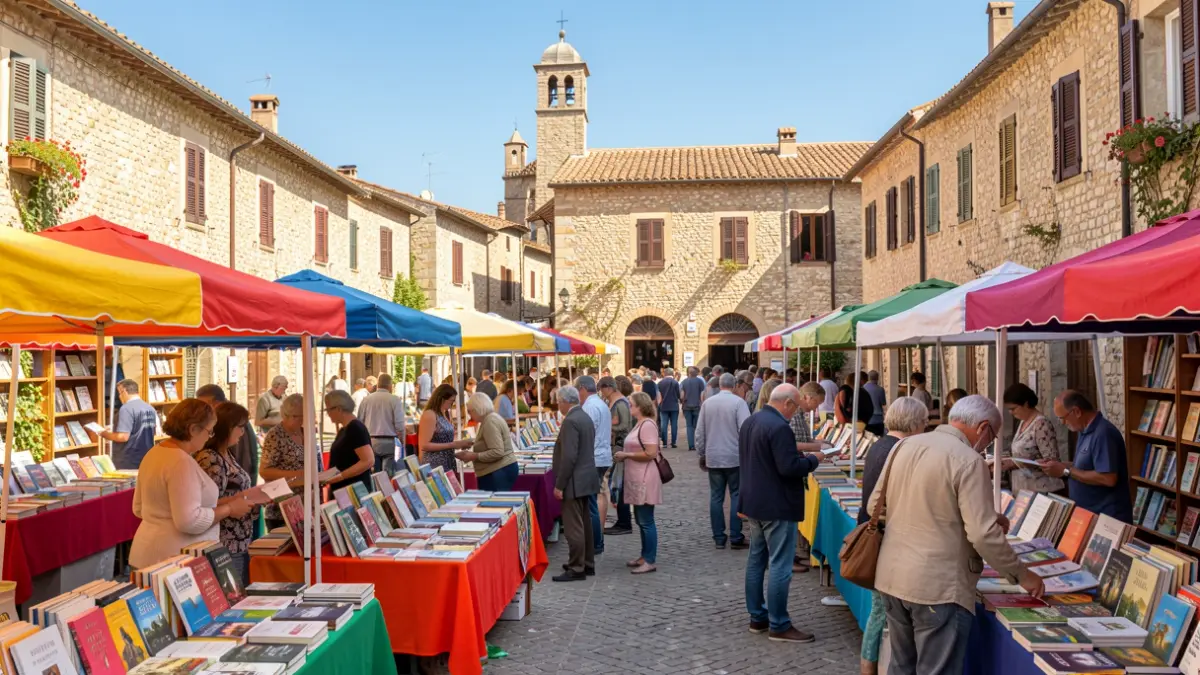
Every April 23rd, the Sant Jordi festival repeats as a ritual where the rose and the book are protagonists. However, beyond quick consumption and market novelties, this date can be a space for a slower and more conscious choice. The proposal is to seek books that not only entertain but also act as a tool for perception, inviting a change in perspective on history, biography, the body, or myth.
Among the highlighted titles, Tras mi rastro by Gregor von Rezzori (De Conatus), translated by José Aníbal Campos, offers a European vision marked by the displacements and fractures of the 20th century. These are not conventional memoirs, but a narrative that shows how history disorders life, turning the past into a sum of domestic and contradictory scenes.
A new edition of Sonetos a Orfeo by Rainer Maria Rilke (Lumen), edited by Adan Kovacsics and Andreu Jaume, raises the capacity of poetry in the face of loss. Rilke transforms the myth of Orpheus into an energy of language, a way of traversing death without denying it, demonstrating that language remains a living tool.
In Metazoa by Francisco Ferrer Lerín (Jekyll & Jill), animals cease to be mere decoration to occupy the center of the narrative. The work seeks to discomfort the reader and shift focus, reminding us that the human is not the only possible measure of what is narratable. Likewise, En el Japón sagrado by Michiko Barbieri (Errata Naturae), translated by David Paradela López, presents travel as a form of personal recomposition, where a wounded body learns a new way of being in the world through temples and rituals.
The re-edition of Los héroes griegos by Karl Kerényi (Atalanta), translated by Cristina Serna, recovers the original complexity of myth, presenting heroes as figures traversed by fatality and violence. For its part, La voz solitaria by Frank O’Connor (La Navaja Suiza), translated by Bernardo Santano Moreno, explores the short story as a territory of the margins, belonging to those who do not fit into the social construction of the novel.
Vegetal sensibility manifests itself in Sumario de plantas oficiosas by Efrén Giraldo (Acantilado), where plants become thought, teaching the logic of slowness and resistance. More visceral is Arterial by María José Galé Moyano (Candaya), a novel that turns blood into language, exploring the intimate and the urban, grief and art without domesticating the body.
Memory and language intersect in Leche de silencio by Socorro Venegas (Páginas de Espuma), where the question of the mother tongue becomes a political and emotional inquiry. Finally, Marcelino by the Burriana-born Bibiana Collado Cabrera (Pepitas) offers the voice of a rural man reflecting on desire and masculinity, while Agéladas de Argos by Pierre Michon (Shangrila), translated by Ester Quirós, condenses the classical past into prose that makes myth a persistent form of intensity.
Together, these twelve books do not offer closed answers, but rather better-formulated questions, inviting a choice of perspective that transforms the way we read and live.