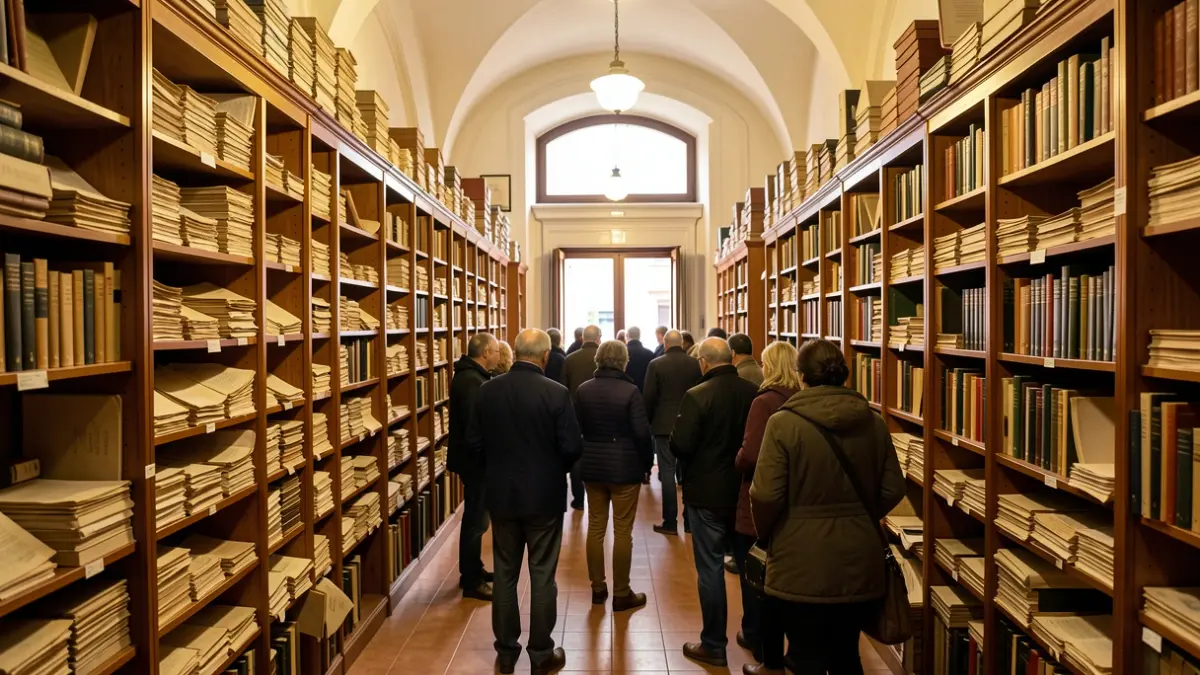
The Vila-real Municipal Archive commemorated International Archives Day with an open house that sparked considerable public interest. Approximately 60 people registered for the scheduled visits, with about twenty in the morning session and around 40 in the afternoon, to gain firsthand knowledge of the work carried out by this municipal service and discover some of the documentary treasures it safeguards.
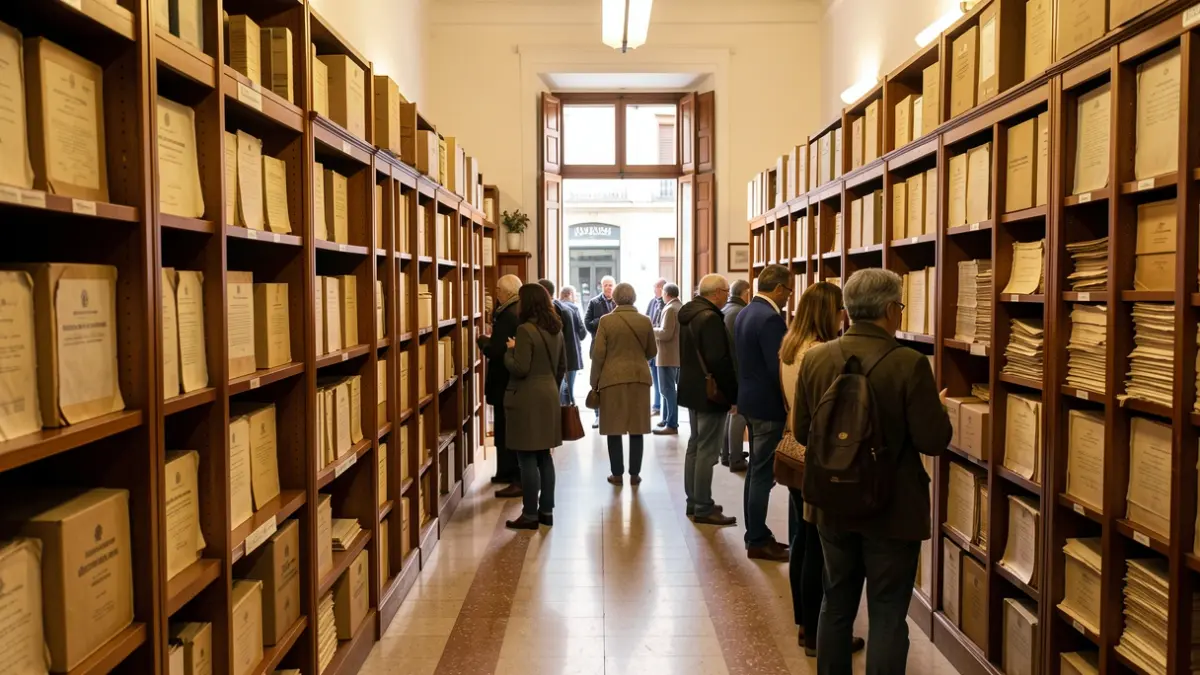
For approximately two hours, Archive staff guided participants through the facilities, explaining the unique aspects of the space, its functions, the challenges it faces, and the importance of preserving the collective memory of Vila-real. Attendees in the morning session had the opportunity to see, touch, and even smell some of the historical documents kept in the municipal deposits.
The event included visits to the two currently active exhibitions, a tour of the deposits housing Vila-real's documentary heritage, and a workshop identifying emblematic city locations from old photographs – an activity that tested participants' memories and fostered the exchange of recollections and experiences.
Furthermore, the Archive has brought to light historical documents, curiosities, and recent findings that continue to offer new perspectives on local history. During the morning session, municipal archivist Miguel Ramos detailed that the oldest document from Vila-real preserved in the Archive dates back to 1307 and concerns the appointment of water distributors. Ramos also displayed photographs from the late 19th and early 20th centuries; a film affected by vinegar syndrome, which emits a peculiar odor; and a musical score by the city's most internationally renowned musician, Francesc Tàrrega. He also announced that the study and analysis of the documentary legacy related to the Vila-real-born guitarist is currently one of the Archive's main research projects, yielding significant findings.
The visits also provided a space for dialogue with the public, who could ask questions, receive information, and learn closely about the daily technical work involved in preserving, cataloging, and disseminating the municipal documentary heritage.
The event also featured the participation of the councilor responsible for the Municipal Archive, Santi Cortells, who emphasized the importance of opening this service to the public. "The Archive preserves a fundamental part of our collective identity. Everything it holds helps us understand who we are, where we come from, and how Vila-real has evolved over the centuries," he stated.
Cortells also highlighted the educational value of initiatives like this: "It is important for citizens to know the documentary heritage we preserve and the work the Archive does. The people who participated in the visits today also become ambassadors for this heritage, helping to spread its value and raise awareness about the need to preserve it for future generations."
Through this activity, the Vila-real Municipal Archive joins the international commemoration of a day that champions the essential role of archives as guarantors of memory, transparency, citizens' rights, and the preservation of documentary heritage.