
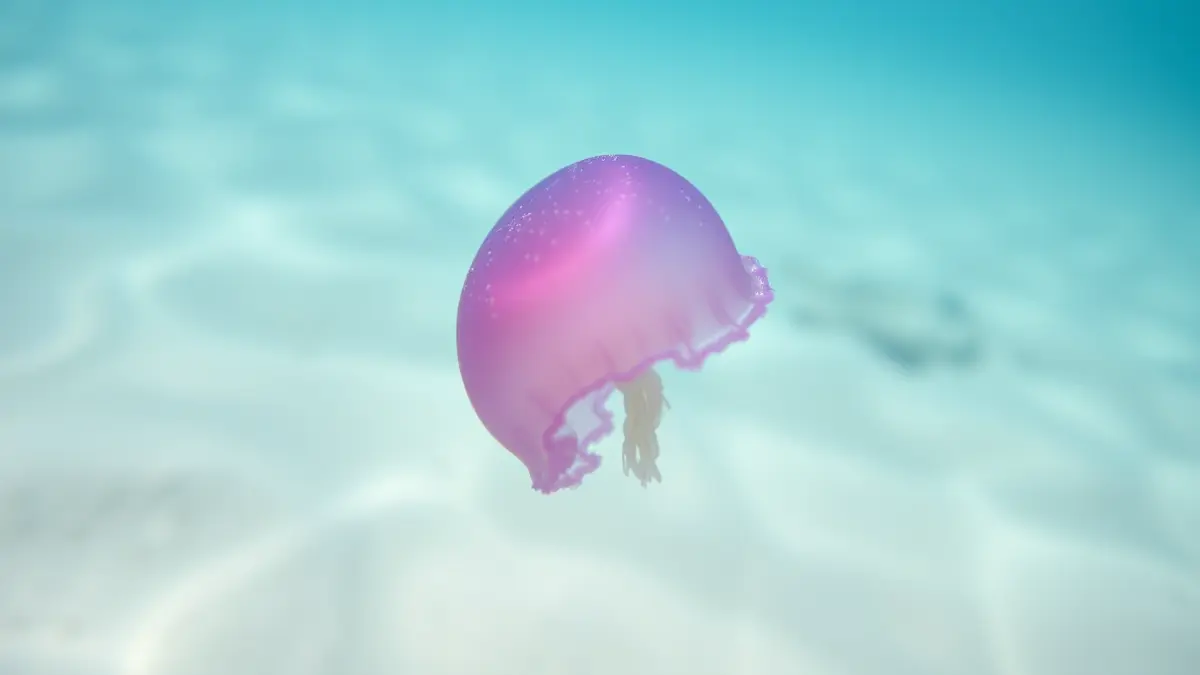
Recent weather conditions have favored the appearance of these marine invertebrates. The first sightings occurred on Saturday off the coast of Orpesa, and they have subsequently moved south, affecting areas such as Benicàssim and Castelló.
“"On Saturday I saw a large quantity off the area of Playa de la Concha, and on Sunday it was spectacular, especially in the Renegà area. I was going to surf, but I let it go to avoid a fall."
The presence of Pelagia Noctiluca has been confirmed on beaches such as La Concha and Retor in Orpesa, and in Benicàssim on Almadraba, Voramar, and to a lesser extent, Heliópolis beaches. Although initially detected offshore, they have gradually reached the coast.
This jellyfish species is characterized by its bright pinkish-violet color and its bulging umbrella. Its tentacles contain stinging cells that, upon contact with the skin, can cause severe allergic reactions and, in extreme cases, severe respiratory problems. Therefore, it is recommended to avoid contact and, in case of a sting, rinse the affected area with salt water to alleviate the pain, avoiding fresh water, ammonia, or vinegar, as these can reactivate the toxins.