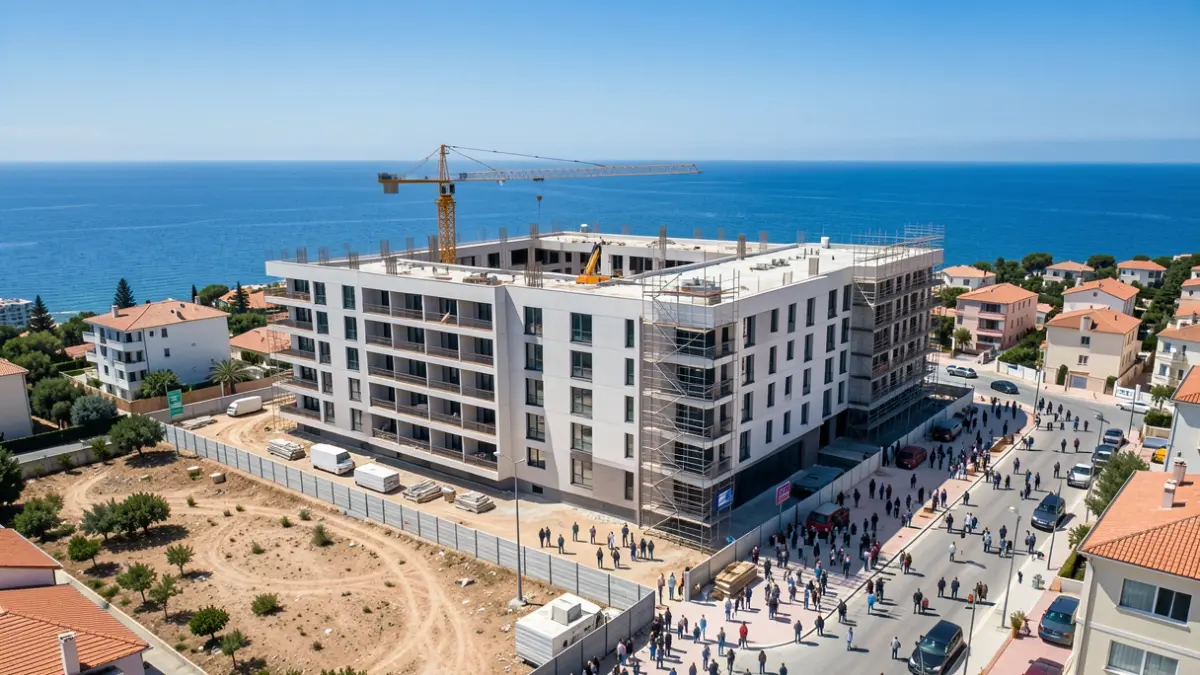
The Altea City Council has taken a new step in its public housing policy by tendering the design project for a public protection housing building intended for permanent social rental. The property will be located on Santa Teresa street, below the Renaissance Bulwark and Precinct of the old town. The contract has a base tender budget of 68,002 euros and an execution period of eight months.
The offer submission process will remain open until June 10th at 2:00 PM and will be processed through an open procedure with electronic proposal submission. The Councilor for Urban Planning and Housing, Jose Orozco, indicated that the City Council "has enabled access to the tender through the Public Sector Contracting Platform" and added that on the website https://bit.ly/4uOP9j3 "all the information is available for complete tender details".
The councilor explained that the future development “contemplates the construction of between 10 and 15 protected homes on a municipal plot of 779 square meters located next to the Traditional Historic Center of Altea, a location that seeks to promote the social and urban integration of future residents”. Orozco added that the selection of the winning project “will be based on various technical and economic criteria, although the assessment of the preliminary project presented will carry fundamental weight, with the aim of guaranteeing the maximum architectural, functional, and social quality of the proposals”.
According to the functional program included in the technical documentation, at least 60% of the homes must have two bedrooms, while the rest can have one and, exceptionally, three bedrooms, which cannot exceed 20% of the total.
Orozco indicated that the building will be “primarily for young people from Altea so they can develop their life project in the municipality without being forced to leave due to the high rental prices, and for families and individuals with housing needs, who require public administration support to access safe, dignified, and affordable housing. As it is a designated plot, the homes will be permanently allocated to social rental, allowing the consolidation of a municipal pool of affordable housing in the long term,” he added.
The councilor pointed out that this project “is part of a global strategy by the City Council to address the housing access problem in Altea and ensure that our residents can continue living in their town”. He also recalled other initiatives promoted by the council, such as “the Neighborhood Program for the rehabilitation of 24 buildings, the regulation of tourist homes to limit their proliferation and ensure residential use, and the acquisition of two social housing units through the right of first refusal and withdrawal mechanism”.
For his part, the mayor of Altea, Diego Zaragozí, highlighted that the government team “is also working to unblock the Bellas Artes sector, where a development of around 170 public protection homes could be carried out” and stated that “we know that housing is one of the main concerns of the citizens, and that is why we are promoting brave and sustained policies over time that allow us to expand the public housing stock and offer real alternatives to young people and families”.
The tender establishes that the architectural project will be evaluated “both by economic and technical criteria. Among the aspects that will carry greater weight are the quality and organization of spaces, energy efficiency, urban integration, the viability of the proposal, and the subsequent maintenance of the building,” asserted the Councilor for Urban Planning and Housing.
Jose Orozco concluded by indicating that the technical documentation “also sets sustainability and accessibility criteria” and explained that the homes “must incorporate thermal break windows, low energy consumption systems, pre-installation for electric vehicles, and easy-maintenance materials. Furthermore, efficient and environmentally friendly construction solutions will be prioritized,” stated Jose Orozco before concluding by affirming that the building will also feature “low-consumption elevators, adapted common areas, landscaped spaces, and one parking space per dwelling, which can be located outdoors, in a semi-basement, or on the ground floor”.