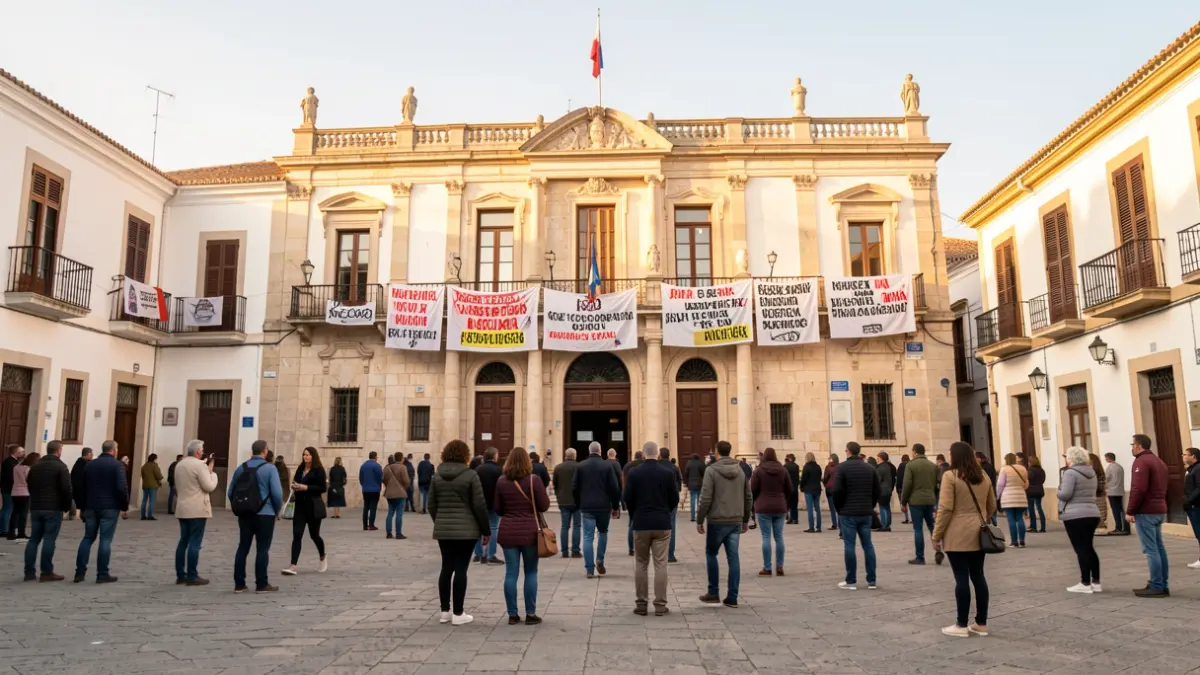

The Minister of Health, Mónica García, insisted this Friday, before a new national doctors' strike begins on Monday, that "the key to unblocking the conflict lies with the communities." During the presentation of the Plan Veo's assessment, García referred to the last meeting of the Interterritorial Council of the National Health System, held on Wednesday, which ended without agreements due to the communities' opposition to voting on agenda items. These items included agreements and recommendations related to the doctors' demands, who are striking again from June 15th to 19th to express their rejection of the text.
"The Ministry has done its part, it has fulfilled its commitment to address the most ambitious health labor reform that can be tackled within state competencies. It has put on the table and stirred the pot: the improvement of professional working conditions, which has been pending for 23 years. It's a relay race, and we are passing it to the communities, because it is the communities that must materialize these working conditions," she stated.
In fact, she added, at the last Interterritorial Council, "what we put on the table are the measures that the professionals are demanding, which are not abstract things, but concrete matters. Reducing the hour of the guard duty, having specific tables for dialogue and participation of doctors, having 35 ordinary working hours... ". "All these materializations of what emanates from the Framework Statute are the responsibility of the autonomous communities. So much so that the autonomous communities refused to participate in that Interterritorial Council because they said it is their competence," insisted the head of Health.
She emphasized that it has been the communities "that have already agreed to the measures we brought to the Interterritorial Council the other day, some of which they already comply with, and which are the ones that can unblock these legitimate demands of professionals to work better, with better quality, fewer hours, less exhaustive shifts, guard duties that are not 24 hours...". "This is about talking less about who is to blame and all working on what truly matters. We are in a moment with two challenges. One is a demographic challenge, a strain on our health system with an increase in demand, even though we have more professionals and more budget than ever. And the other is how we achieve that transformation of our system and demand while improving working conditions. I invite the communities once again to join this challenge," she concluded.