The Third Vice Presidency and Ministry of Environment, Infrastructure, Territory, and Recovery has participated in the presentation of the 1st International Mining Restoration Congress (CIREM), the first forum of its kind to be held in Spain. It will bring together public administrations, companies, researchers, and national and international professionals in Valencia from November 24 to 26, 2026, to address the environmental and sustainability challenges linked to extractive activity.
The regional secretary for Environment and Territory, Sabina Goretti Galindo, led the presentation of this initiative, promoted by the Network for the Restoration of Mines and Quarries and supported by the Generalitat, which has been involved in the project since its early organizational phases. Also participating were the Director General of Natural and Animal Environment, Luis Gomis, and the Director General of Environmental Quality and Education, Jorge Blanco.
During her speech, Galindo highlighted that the choice of Valencia as the venue for this pioneering event “is no coincidence; it is a reflection of a firm commitment, a track record of work, and a vision for the future in which the Generalitat has wanted to be involved to make the city the international capital of territorial sustainability”.
The congress aims to create a benchmark space for the exchange of knowledge and experiences on mine and quarry restoration, fostering dialogue between the scientific community, the business sector, and public administrations to move towards more sustainable extractive activity models aligned with territorial conservation.
The Network for the Restoration of Mines and Quarries (RMC), the entity promoting the congress, has emphasized that the city combines a strategic position in the Mediterranean arc with a consolidated commitment to sustainability. It also boasts the Polytechnic University of Valencia (UPV), one of Spain's most prestigious academic institutions in engineering and applied sciences. The UPV, which will serve as the academic venue for the congress, also hosts the Chair of the Network for the Restoration of Mines and Quarries, through which specialization in mining restoration is being developed at the university level.
The regional secretary also recalled the economic and social importance of the mining sector, which in Spain generates over 3.6 billion euros and employs more than 30,000 people across more than 2,500 active operations. In the Comunitat Valenciana, the production of aggregates, clays, and marble limestone supplies strategic sectors such as construction, infrastructure, and the ceramic industry.
In this regard, Galindo pointed out that “the real challenge of the 21st century is how we do it. The challenge is coexistence: making economic development and resource supply compatible with the radical protection of our biodiversity, the recovery of degraded ecosystems, and the perfect landscape integration of our environment”.
She also underlined the Consell's commitment to sustainable mining and effective ecological restoration, stating that “our regional mining policy is no longer limited to oversight but now focuses on promoting sustainable mining and real, effective ecological restoration. We firmly believe in the dialogue that this congress promotes: a strategic alliance between cutting-edge science, corporate responsibility, and administrative agility.”
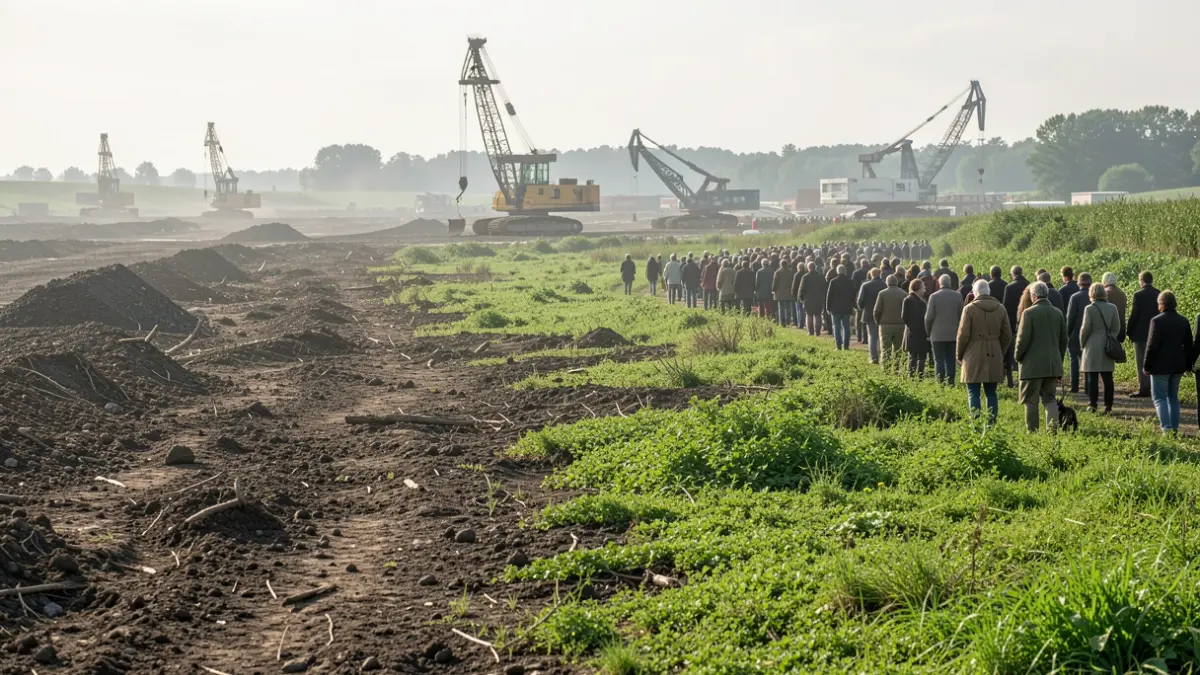
The regional secretary highlighted that the Comunitat Valenciana has internationally recognized experiences in this field, including the European project LIFE TECMINE, developed in former mining sites in Ademuz. This initiative has enabled the application of innovative ecological restoration techniques adapted to the Mediterranean environment and serves as a practical example for congress participants during the scheduled technical visits.
Finally, Galindo invited attendees to use the November congress “to debate, transfer knowledge, replicate best solutions, and break down myths about extractive activity,” and defended the forum's role in “designing the mining of the future, aligned with nature, respectful of the territory, and committed to future generations”.