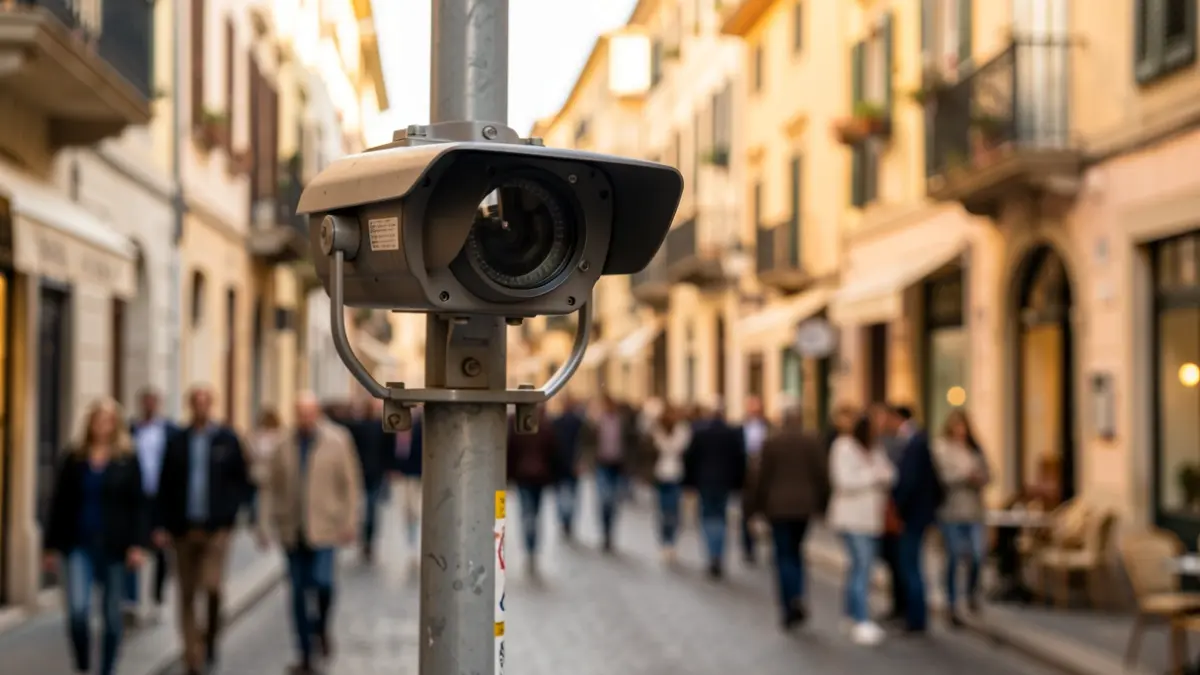
The city of Valencia now has 10 fixed pole cabins where the Local Police can place mobile radars on a rotating basis. This measure is part of the City Council's road safety master plan, aiming to halve serious and fatal accidents by 2030.
The Vector 2026-2030 Plan includes this preventive action to enhance the safety of the most vulnerable road users, such as pedestrians, cyclists, and electric scooter users, as well as to improve traffic safety in the city's various neighborhoods. The Councilor for Security and Mobility, Jesús Carbonell, has emphasized that this is a priority for the municipal government.
In November 2025, the City Council acquired two multi-lane speed cameras with image capture and six fixed pole cabins, adding to the two speed cameras and four cabins previously operated by the Local Police. These new devices allow for the radar units to be relocated.
The new locations, decided by the Local Police and the Mobility department, include avenues such as Hermanos Machado (two points), Maestro Rodrigo, Pío XII, Cid, Camí Nou de Picanya, Fernando Abril Martorell, López Piñero, and Antonio Ferrandis.
As explained by Councilor Jesús Carbonell, the primary function of these radars is to "prevent high speeds on those city roads where accident rates are highest," with the aim of "minimizing accidents and their severity."
These actions are complemented by annual Local Police campaigns focused on monitoring alcohol and drug consumption, vehicle ITV (technical inspection) and SOA (compulsory insurance), distracted driving, and parking and traffic violations. The six speed cameras will be installed on a rotating basis in the ten existing cabins.
Carbonell pointed out that many stretches where the cabins are installed have speed limits of 50 km/h or less, yet drivers often exceed these speeds. "With this measure, we aim to deter drivers from speeding, thereby preventing accidents and collisions," he stated.
The councilor concluded that the objective is to "make drivers aware that adhering to the posted speed limits makes our streets and avenues safer for pedestrians, cyclists, and drivers themselves."