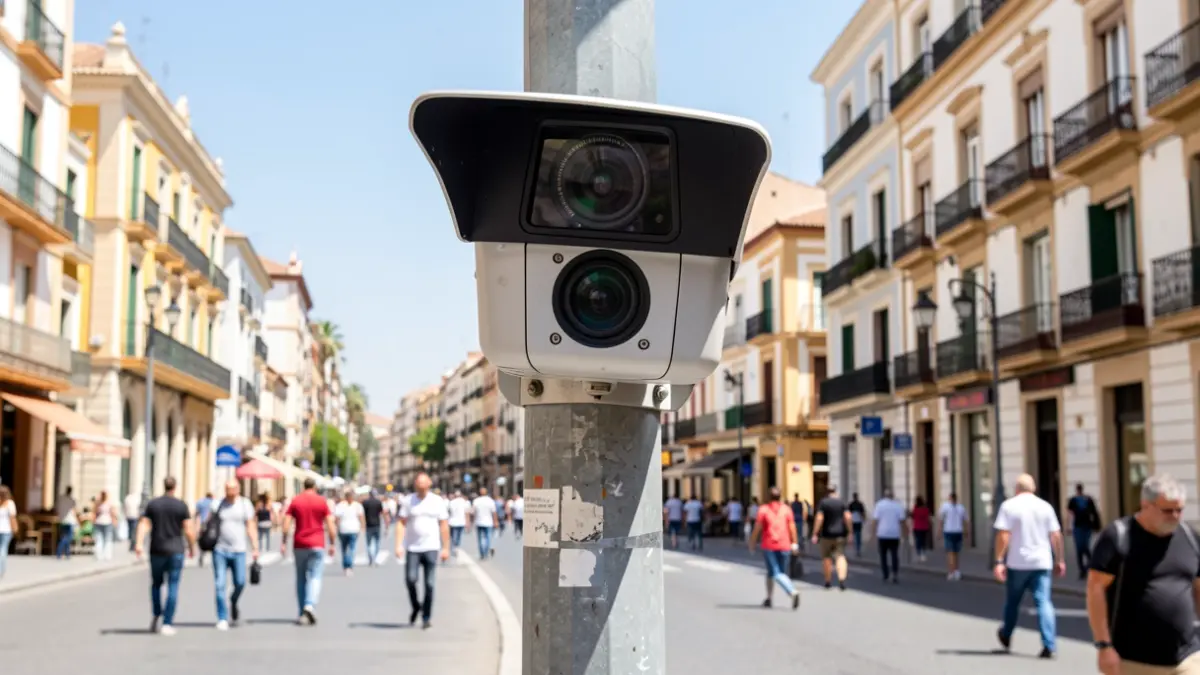
Cybersecurity has become one of the major challenges for public administrations amidst accelerating digitalization. The expansion of artificial intelligence, the increase in connected services, constant exposure to attacks, and growing technological dependence compel governments and companies to strengthen their protection systems in an increasingly complex environment. In the Comunitat Valenciana, this process is now marked by the transformation of the historic CSIRT-CV into Talaia, a new brand and space conceived to broaden the reach of cybersecurity culture, bringing it closer not only to institutions and municipalities but also to businesses, educational centers, and citizens.
Carmen Serrano, director of the center and deputy general director of Cybersecurity for the Generalitat Valenciana, explains that the evolution towards Talaia is a response to the need to adapt to an increasingly complex landscape. The previous name, focused on technical incident response, did not reflect the growing awareness and outreach efforts. The new name, Talaia, evokes watchtowers that collaborate and alert each other to dangers, symbolizing a new, more open phase connected with society. This new space will allow for activities and visits from institutions like schools, universities, or business confederations, supported by funding from the Generalitat and the Recovery and Resilience Plan.
Talaia will offer a training plan and various actions, including demonstrative visits to the laboratory, tailored to different groups, as well as online training and awareness sessions for all audiences. Citizens will be able to interact with the center through programs designed to enhance their awareness of digital risks.
Regarding industrial cybersecurity, a previous study identified that the main weakness in Valencian industry is digitalization without initial consideration for security. The interconnection between industrial systems and information technologies, along with the obsolescence of old systems and internet exposure for remote management, increases risks. The supply chain also presents vulnerabilities, as demonstrated by historical attack cases through external maintenance.
Serrano emphasizes that all sectors are critical, especially those linked to the physical world, where parameter modification can have severe consequences, such as water contamination or affecting essential infrastructure. The Generalitat, through CSIRT-CV, has been working since 2007 on protecting public services, acknowledging that complete security does not exist and that it is a continuous process of adaptation to new technologies like artificial intelligence.
Artificial intelligence presents a dual nature: it can be a wonderful tool for good, but also a risk if used by cybercriminals. Offensive AI is a concern, but it is also used for anomaly detection and improving defense tools. The Generalitat collects approximately 15 billion security events annually for network monitoring, of which nearly 5,000 could have become real incidents last year. Attacks associated with the Ukraine conflict and constant phishing campaigns, especially during tax season, have been reported, aiming to compromise accounts or steal sensitive information.
Regarding the Sindicatura's criticisms of the cybersecurity of the Valencian public instrumental sector, Serrano clarifies that the audit focuses more on governance than on technical measures. The need to promote cybersecurity awareness in autonomous entities is acknowledged. To address the shortage of specialized professionals, collaboration with private companies like S2 has been chosen, providing qualified personnel and cutting-edge technologies, as public provision and salary competition make it difficult to attract young talent.
The new Talaia center, with 65 staff members, has expanded operational capacity, particularly in industrial cybersecurity and training, thanks to European funding. The main concerns in the short to medium term are the evolution of offensive AI and the impact of quantum computing on current cryptography, for which resistant systems are already being developed.