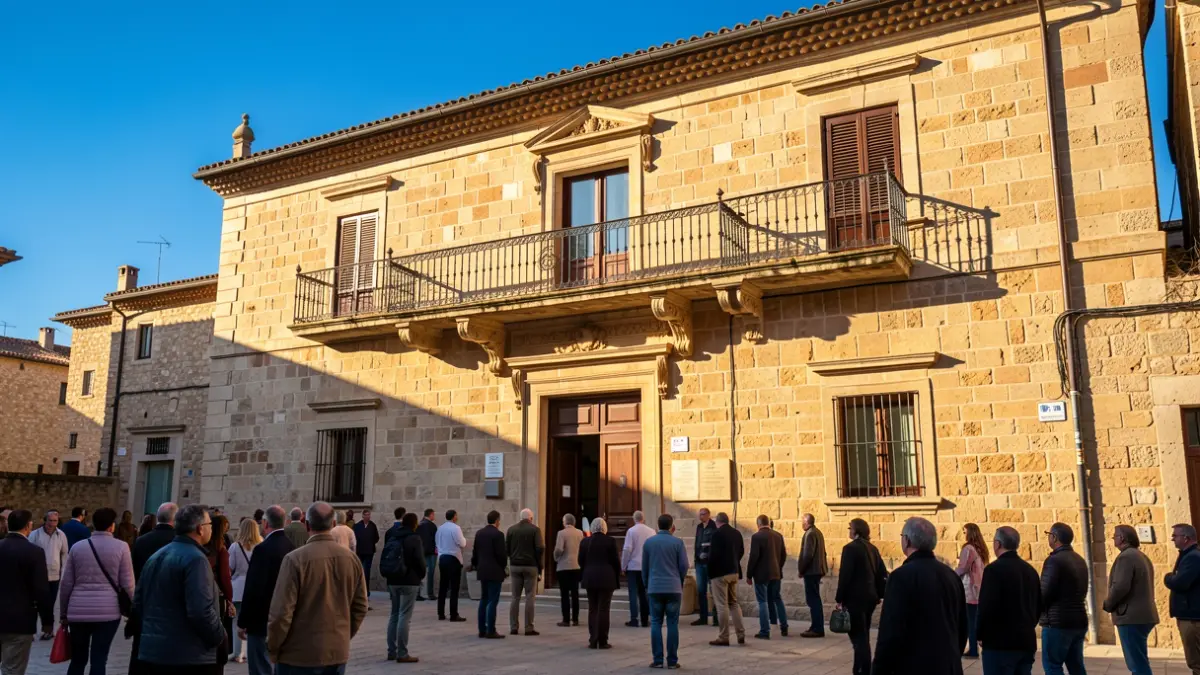
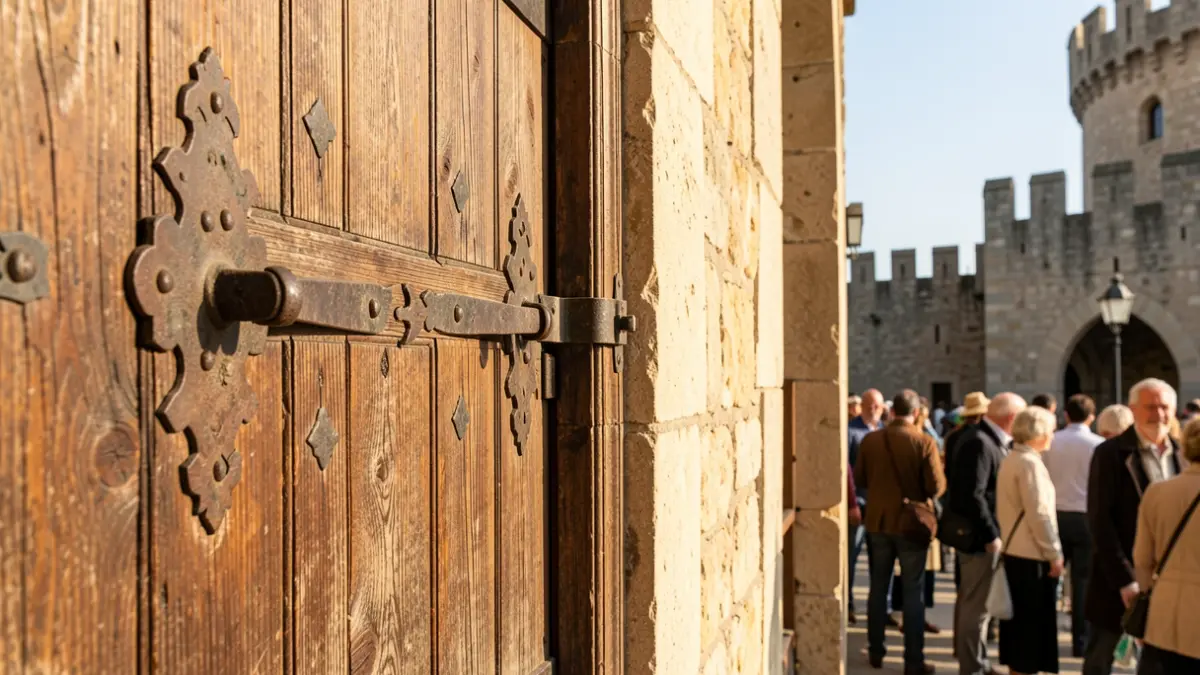
The intervention, aimed at conserving and enhancing various elements installed in the monument during the 1960s and 1970s, will improve the condition of doors, hardware, grilles, and metal parts associated with one of the city's most recognizable heritage sites. The work is part of the municipal historical heritage maintenance and conservation tasks.
The carpentry to be restored is distributed across the ground floor, first floor, and second floor of the building, presenting a varied state of conservation due to the passage of time, exposure to the elements, humidity, solar radiation, and pollution from urban traffic.
The Councilor for Culture, José Luis Moreno, stated that "we have committed from the beginning of our term to the recovery of our historical heritage." Therefore, "from the City Council --he continued-- we are carrying out actions in the city's main historical buildings to restore them." "Now, this intervention will improve the image of one of the city's most visited buildings, adding to others already carried out in monuments like the Torres de Quart and La Lonja," he added.
The planned works will address both the recovery of the wood and the treatment of the iron elements. Specifically, the intervention proposal, developed by the company Noema Restauradores S.L., includes cleaning surfaces, removing accumulated dirt, repairing cracks and fissures, inspecting supports and anchors, protecting the wood, and restoring hardware and forged pieces.
Action will also be taken on the metal doors on the ground floor, with treatments against oxidation and minor interventions to prevent friction and improve their functionality. The restoration will pay special attention to details that are part of the characteristic image of the Torres de Serranos, such as the metallic diamond points on some doors, several of which have been lost over time.
The intervention foresees their replacement with pieces of similar appearance, but distinguishable upon close inspection, in accordance with current heritage conservation criteria. It will also allow for the correction of specific deteriorations detected in various doors of the monument, such as misalignments, oxidation of keyholes and handles, loss of fastening nails, missing forged elements, or damage from daily use. In some cases, the door leaves present sagging issues that hinder their manipulation and can affect the pavement, thus the restoration will also contribute to improving the functionality of these accesses.
In addition to material repair, the intervention will include protective treatments to extend the lifespan of the carpentry. The wood will undergo an intervention aimed at restoring its stability and improving its resistance to external agents, while the metal elements will be cleaned, treated, and protected to slow down oxidation processes.
The objective is to ensure rigorous conservation of pieces that remain exposed year-round to the environmental conditions of the urban setting. The restoration works are being carried out by the company Ibaizabal Técnicos y Obras SLU, awarded the contract for a total amount of 30,876.16 euros.
In a first phase, the monument will be closed to the public from May 25 to June 14 for rehabilitation work. With this action, the Valencia City Council reinforces its commitment to the protection of cultural heritage and the maintenance of historical spaces that are part of the city's collective memory.
The restoration of the carpentry of the old Portal de Serranos will improve the overall appearance, recover deteriorated details, and ensure that the monument continues to be enjoyed "in adequate conditions" by residents and visitors. The Torres de Serranos have been declared a Bien de Interés Cultural (BIC) since June 1931, cover a total area of 1,376.82 square meters, and were built between 1392 and 1398 by master stonemason Pere Balaguer on a previous gate.