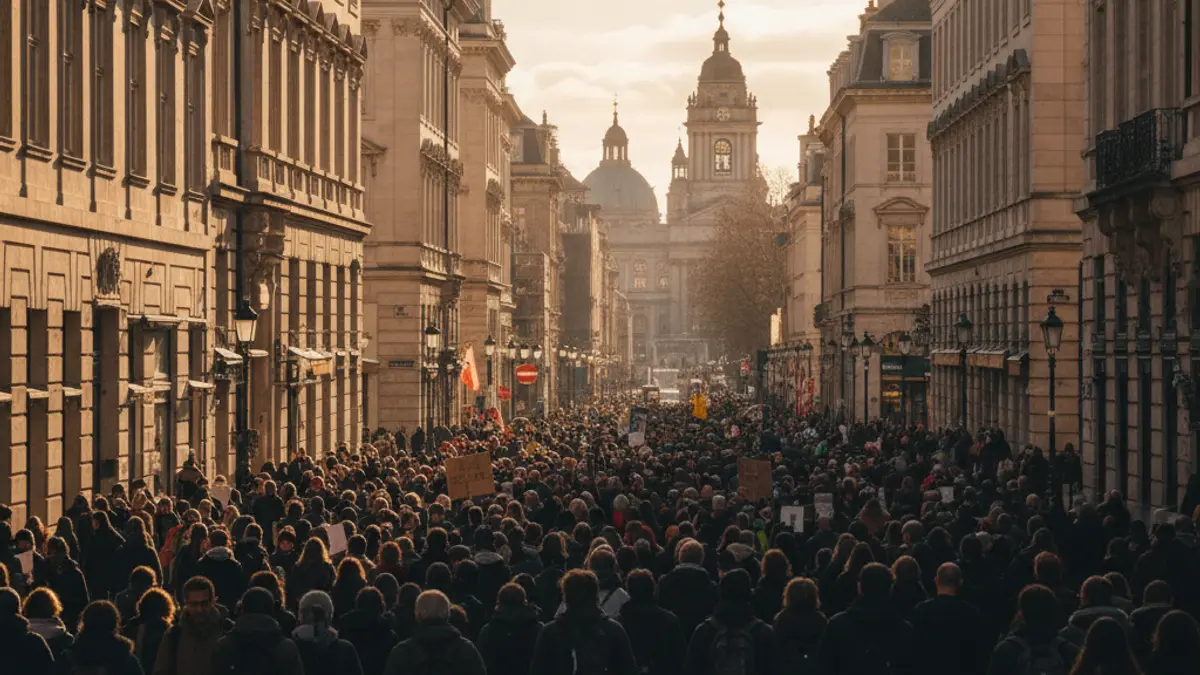
The mobilization in Valencia surpassed the planned route, with the demonstration called in Sant Agustí Square slowly advancing along Carrer de la Pau. The Spanish Government Delegation estimates a participation of over 20,000 people, while unions raise the figure to 50,000.
This protest represents the first major political crisis for the president of the Generalitat, and comes after months of failed negotiations between the Ministry of Education and workers' representatives. Unions denounce a lack of negotiating will and accuse the government of disregarding the sector's demands.
“"Enough is enough: less bureaucracy, fewer ratios, more salary, more staff, and more Valencian."
The strike is supported by unions such as STEPV, CCOO, UGT, CSIF, and ANPE, as well as entities like Escola Valenciana, Fampa-València, the Gonzalo Anaya Confederation, and the Student Union. Organizers claim that participation in educational centers has been “historic,” with adherence percentages between 85% and 95%. In contrast, the Ministry of Education lowers the follow-up to 47.01% until 13:00, although many centers only had minimum service staff.
Union demands include reducing student-teacher ratios, reinforcing staff, immediate replacements for absences, salary improvements, and increased investment in educational infrastructure. They also demand guarantees for the Valencian language within the education system and a reduction in teachers' bureaucratic workload.
“"The situation is complex, but the government maintains open channels of dialogue and will try to resume negotiations as soon as possible."
The Ministry's proposal last Thursday, which included a salary increase of 1,050 gross euros annually until 2029, has been deemed “insufficient” and “derisory” by the unions. The Minister of Education admitted that the situation is “complex,” but assured that the government maintains “open channels of dialogue” and will try to resume negotiations “as soon as possible.” Meanwhile, the strike continues, and unions have announced more mobilizations, sit-ins, and informational pickets throughout the week to maintain pressure.