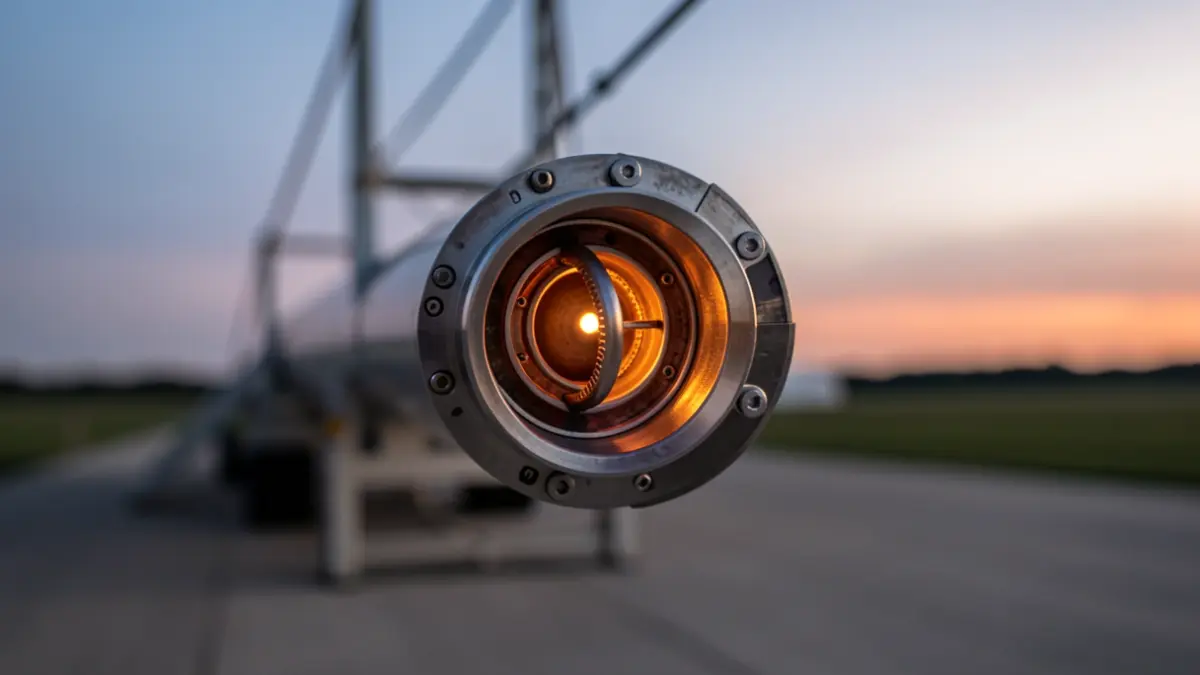
The 'Origin' rocket achieved an exact altitude of 10.843 kilometers from the El Arenosillo Experimentation Center (Cedea), located within the facilities of the National Institute of Aerospace Technology (INTA) in Huelva. This achievement surpasses the previous record of 7.8 kilometers and reached a maximum speed of 2500 km/h, twice the speed of sound.
Guzmán Marchesi, a UPV student and the team's executive director, along with Luna Marhuenda, stated that "the days for UPV to reach space are numbered; we have validated the technology, and it can be achieved within three years." Faraday Rocketry's objective is to make UPV the first European university to reach space.
The 'Origin' rocket, measuring three meters and weighing 20 kilograms, was entirely built by students. It incorporates proprietary manufacturing techniques for its engine, modular avionics, and sea recovery system. The team, comprising 68 students from various university degrees, had previously attempted to break the record in February, but adverse weather conditions led to launch postponements.
Faraday Rocketry, which has been dedicated to space rocketry for four years, has launched six rockets and secured two victories in the European University Rocketry Championship (EuRoC). With this new record, they solidify their position as the first Spanish team to achieve such a feat, competing against universities with larger budgets.
The team has benefited from the collaboration of the Armed Forces and INTA in supporting young talent, in addition to sponsorship from several companies.