
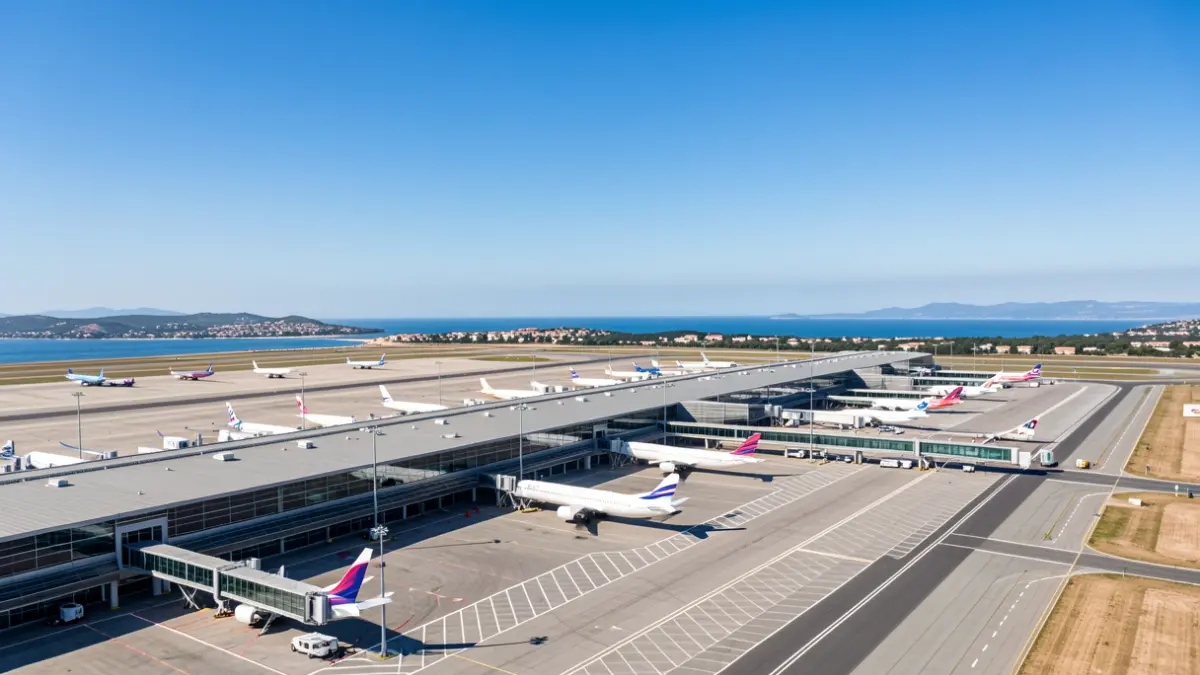
The airports of Valencia and Alicante-Elche Miguel Hernández concluded April with double-digit passenger growth, once again highlighting the urgency to adapt these infrastructures to the increasing demand. The Minister of Industry, Tourism, Innovation, and Commerce, Marián Cano, emphasized that the data published by Aena confirms the "strong dynamism" of Valencian airports and the need to accelerate planned actions.
According to air traffic statistics, Valencia Airport registered 1,150,985 passengers, a 10.7% increase from the previous year, while Alicante-Elche surpassed two million with 1,921,861 travelers and a 10.9% year-on-year rise. Valencia handled 8,749 flights (+8.3%), and Alicante-Elche managed 12,074 movements (+10.9%).
International traffic has been the primary driver of this growth. In Valencia, it accounted for 886,063 travelers (+13.6%), compared to 263,349 domestic passengers (+2.5%). At Alicante-Elche, international travelers numbered 1,697,090 (+12.3%), with domestic passengers reaching 222,973 (+1.3%).
Marián Cano highlighted that these figures demonstrate the strength of the Valencian tourism sector and the attractiveness of the Valencian Community's destinations throughout the year. However, she cautioned that growth must be accompanied by adequate infrastructure to maintain competitiveness and provide services aligned with the actual passenger volume.
“"Valencian airports continue to grow beyond many forecasts, and it is essential that the central government and Aena act with agility to adapt their capacity to the evolution of demand and avoid bottlenecks that could limit the tourism and economic development of the Valencian Community."
In the cumulative figures for the first four months of the year, Alicante-Elche has handled 5,867,011 passengers and 37,694 movements (+8% and +7.7% respectively). Valencia Airport, meanwhile, has recorded 3,701,152 passengers and 29,017 flights (+6.6% and +3%). The Generalitat reiterates its call for airport planning that aligns with real traffic evolution, aiming to prevent terminal capacity from becoming a future growth impediment.