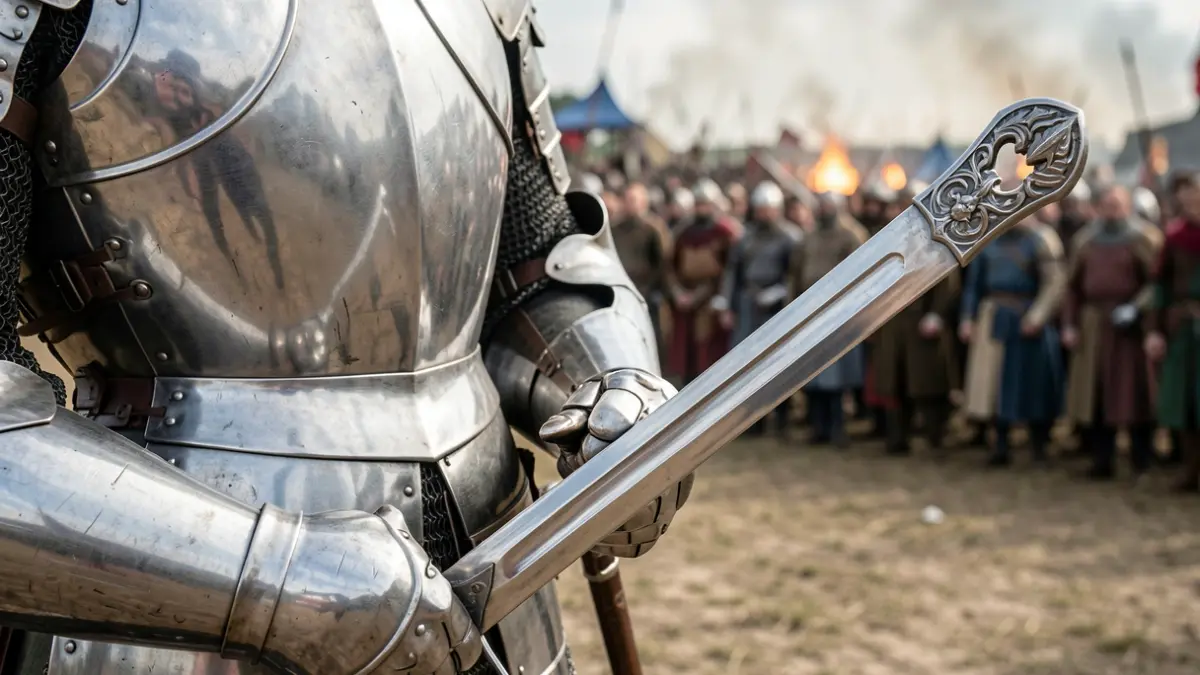
We say someone is 'de punta en blanco' when they appear especially neat, elegant, or dressed with great care. Although it's a very common expression in our daily lives, its origin is not found in a formal suit or a freshly ironed shirt, but in a much older image: that of a knight ready to fight.
In current usage, 'ir de punta en blanco' means to be very well-dressed, with a neat appearance and usually more formal than usual. It applies to situations like weddings, important dinners, ceremonies, or any occasion where someone presents themselves impeccably. It doesn't necessarily mean wearing white, nor does it mean being expensively or flashily dressed. The nuance lies in the care of one's appearance: well-chosen clothes, a tidy look, and the feeling of being prepared for a special occasion.
The most widespread explanation places the origin of the expression in the medieval military sphere. The old form would have been 'ir armado de punta en blanco' (to go armed from tip to white), referring to knights who went into battle or tournaments fully equipped. The 'punta' (tip) would allude to weapons ready for combat, such as lances or swords, while 'blanco' (white) would not relate to clothing, but to the shine of polished metal. Bare, sharp, and gleaming metal weapons were known as 'armas blancas' (white weapons), due to the clear and bright appearance of steel.
The original image was that of someone presenting themselves with all their equipment in perfect condition: armor, weapons, and an appearance ready for action. Over time, that idea of being complete, clean, and gleaming left the battlefield and entered everyday language. Thus, what first described an armed knight eventually came to describe a person dressed with special care. The battle disappeared, but the idea of presenting oneself to others with an impeccable image remained.
A common confusion is to interpret the expression literally. But 'ir de punta en blanco' does not mean wearing white clothes. Someone dressed in black, blue, or any color can be 'de punta en blanco', as long as they are elegant and perfectly put together. The key lies in the figurative meaning of the phrase. 'Blanco' refers to the shiny metal of the weapons, not the color of the outfit. That's why the expression has survived even though almost no one thinks of swords, lances, or armor when using it.
'De punta en blanco' usually carries a tone that is somewhat admiring and perhaps a bit exaggerated. It's not used to simply say someone looks correct, but to emphasize that they have made an extra effort with their appearance. That's why it works so well in phrases like 'he showed up 'de punta en blanco'', 'she was 'de punta en blanco' for the dinner', or 'he presented himself 'de punta en blanco' at the party'. In all of them, the same underlying idea remains: someone has taken care of every detail of their appearance, and it shows.