The Association of Family Businesses of the Province of Alicante (Aefa) is convinced that the current situation of uncertainty offers opportunities to companies that have information on the international landscape and tools for innovation and Artificial Intelligence (AI) to improve their management and production processes. To help achieve these objectives, Aefa has counted on economist José Carlos Díaz and technology and innovation expert Ignacio Linares, as protagonists of the conference 'The World Changes: geopolitics, innovation and productivity in the age of AI', held today in Elche in collaboration with Cedelco and Ibercaja.
The president of Cedelco, Salvador Pérez, commented on the importance of companies having "environments like this forum to anticipate, learn, and collaborate with each other", and pointed out that "doing so in a breakfast format reminds us that the best business conversation often arises from closeness, trust, and shared future vision".
For his part, José María Santos, head of Institutions of the Mediterranean Arc at Ibercaja, stated that "from Ibercaja we promote the economic development of the territories and their productive fabric, adding value to the relationships with Aefa and Cedelco. Our purpose drives us to develop training activities like today's conference".
The president of Aefa, Maite Antón, indicated that with this conference they have proposed to "analyze the current landscape and understand its real implications for our companies" regarding international policy and the emergence of technology such as AI. The business leader pointed out that in complex and uncertain situations it is also possible to find opportunities and advantages for business development. "Because this scenario of uncertainty is, paradoxically, the greatest opportunity that SMEs have ever had to achieve large-company productivity, by relying on artificial intelligence".
Antón referred to the wars in Ukraine and Iran, with the closure of the Strait of Hormuz conditioning the international economy. But she also referred to the new international trade situation between the United States and China. Beyond the pressure on the international economy and the role of the leaders of the great powers, the president of Aefa warned of other types of powers. "It is very curious that at this moment the G7 is meeting with those leaders of the most important states, at the same time and in parallel, there is a G3 with a lot of potential: Anthropic, Open AI, and Google DeepMind. They also have a lot to say and play", referring to the importance of large technology companies in the international arena.
For the analysis of the international situation, Díez gave a presentation titled ‘Geostrategy and Economy’, where he analyzed the macropolitical situation and the correlation of forces in international geopolitics with effects on markets and companies. Antón considers that having data and trends on tariff situations, geopolitical fragmentation, and technological acceleration, elements that are reshaping the global economy, are fundamental for better decision-making and more efficient adaptation to reality, which allows favoring the company.
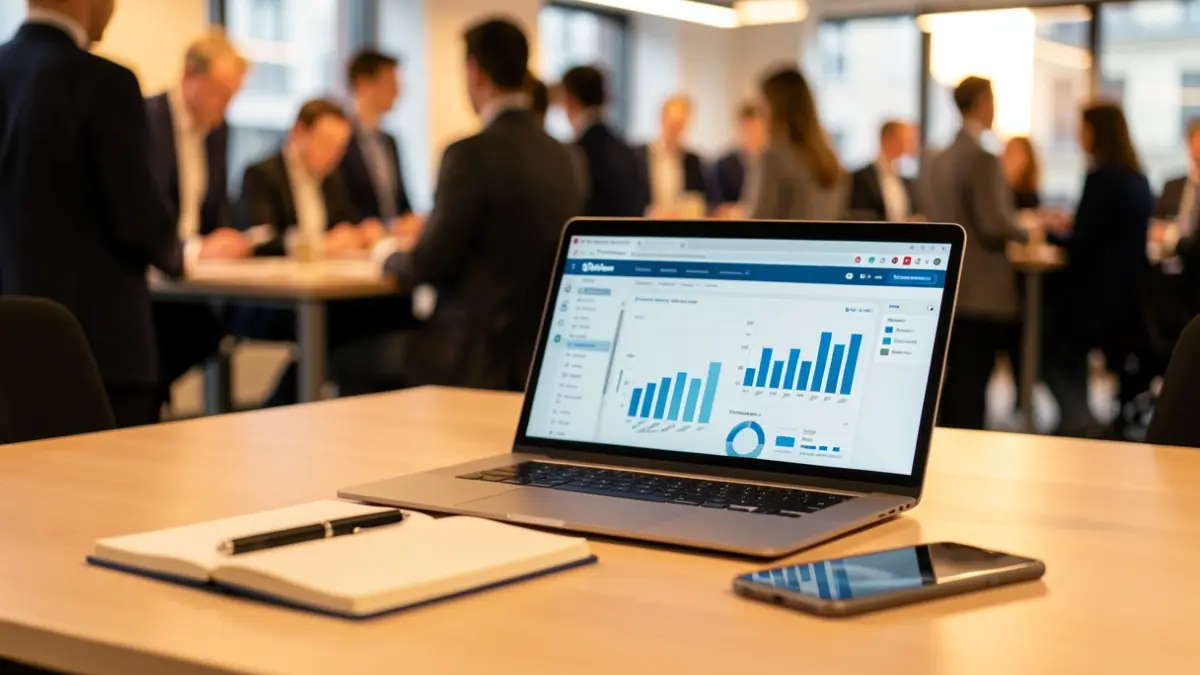
Furthermore, the session included a masterclass with Ignacio Linares, an expert in the field, who offered an explanation on ‘SOIP ESP Innovation Diagnosis’. Companies must understand the technological ecosystem and adapt to new technologies based on Artificial Intelligence. Linares offered an advanced diagnosis session with the aim of helping companies identify growth and transformation opportunities. In this case, this expert commented on the use of proprietary technology, such as the ESP Operating System for Innovation.
Linares argues that company size should not be related to productivity, and that large and small companies can have similar rates if they have the capacity to adapt and incorporate technology. Adequate incorporation of AI into companies leads to better management, a higher productivity rate, reduces costs, and makes work processes and investments profitable.