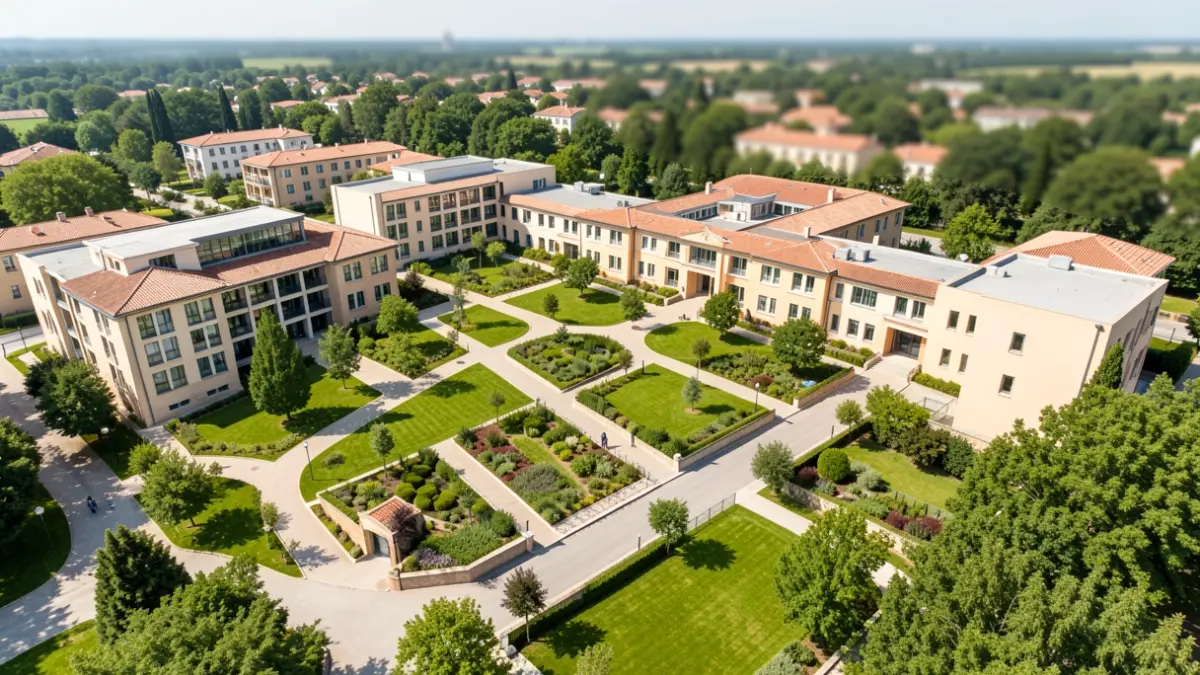
The Miguel Hernández University (UMH) has initiated the second landscaping and urbanization project planned for this year at its Elche campus. This intervention, focusing on the area between La Valona, Quorum I, and a section of the Rectorate zone, has a five-month execution period and a budget of over 660,000 euros, plus 23,000 euros for technical assistance.
The primary objective is to consolidate the campus's main facade on Avenida de la Universidad, creating a design that facilitates pedestrian traffic and integrates rest areas. The project will create pedestrian connections between the Rectorate and the new Valona and Quorum I buildings, incorporating 'rain gardens' and ensuring maximum accessibility, especially after the completion of the La Valona building in late 2023.
A notable feature will be the transformation of the road east of the Rectorate building, changing from a conventional vehicular access to a single platform for pedestrians with expanded landscaped strips. Accessible routes will be prioritized, including a new access to the Valona building with masonry-protected steps and tactile paving to indicate level changes.
In terms of environmental innovation, 'rain gardens' and an intelligent irrigation system, part of the Sustainable Urban Drainage System (Suds), will be implemented. Rainwater will be captured by depressed green areas with filtering pits for natural retention and infiltration. The maintenance of new vegetation, including mulberry trees, tipuanas, melias, ficus, pomegranates, carob trees, and various shrubs, will be managed by smart drip irrigation.
The renovation of public lighting with high-efficiency LED technology is also included, featuring a 50% reduction in light flow during low-traffic hours to optimize energy consumption. Through this project, the UMH aims to enhance connectivity between the Rectorate, Quorum I, and Valona buildings, promoting sustainability and inclusion.
The administrative origin of the proposal dates back to June 2024, with the design formalized in March 2025 after incorporating corrections. This work will complete the last pending urbanization area on campus, excluding the plot reserved for a future photovoltaic plant.