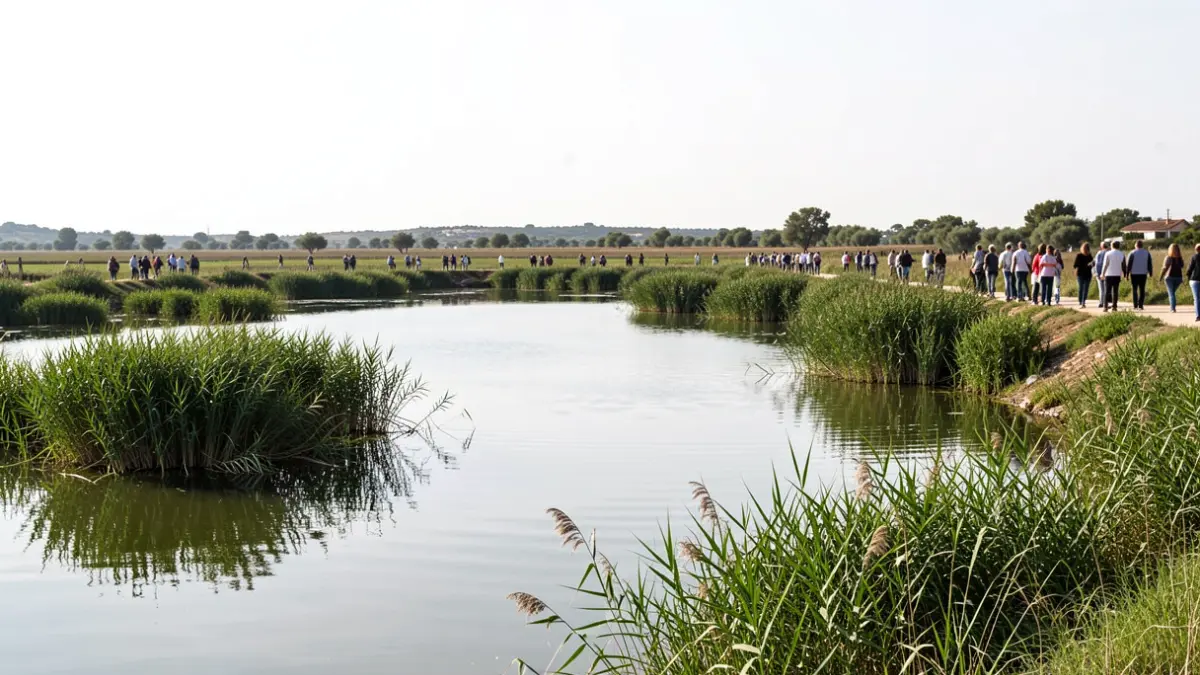
The species, which was considered extinct in the province of Alicante during the 20th century, has found a safe path for its expansion in traditional hydraulic infrastructures. Experts point out that these channels, originally designed for irrigation management, now function as true green corridors connecting the final stretch of the Segura river with the southern wetlands.
The presence of the otter in El Hondo was first documented in 2017. Since then, monitoring has confirmed regular reproduction and the presence of cubs, demonstrating a significant improvement in water quality and food availability in the ecosystem.
“"There is an idea that cultural heritage only consists of castles or sanctuaries, but the hydraulic heritage of this area is an expression of historical wisdom accumulated over generations."
Beyond the fauna, the ADR Camp d'Elx association has demanded the need to protect this hydraulic heritage, which is at risk due to a lack of maintenance. Specialists warn that the conservation of spaces such as El Hondo or the Salinas de Santa Pola depends directly on keeping traditional water uses alive, such as cleaning channels and controlling water flows.