Artificial intelligence (AI) is establishing itself as a key tool in greenhouses, offering farmers and nursery owners the ability to anticipate external threats. This technology, still in the experimental plot testing phase, aims for commercial expansion in the short to medium term to optimize resource management, particularly water, in a sector highly dependent on climate.
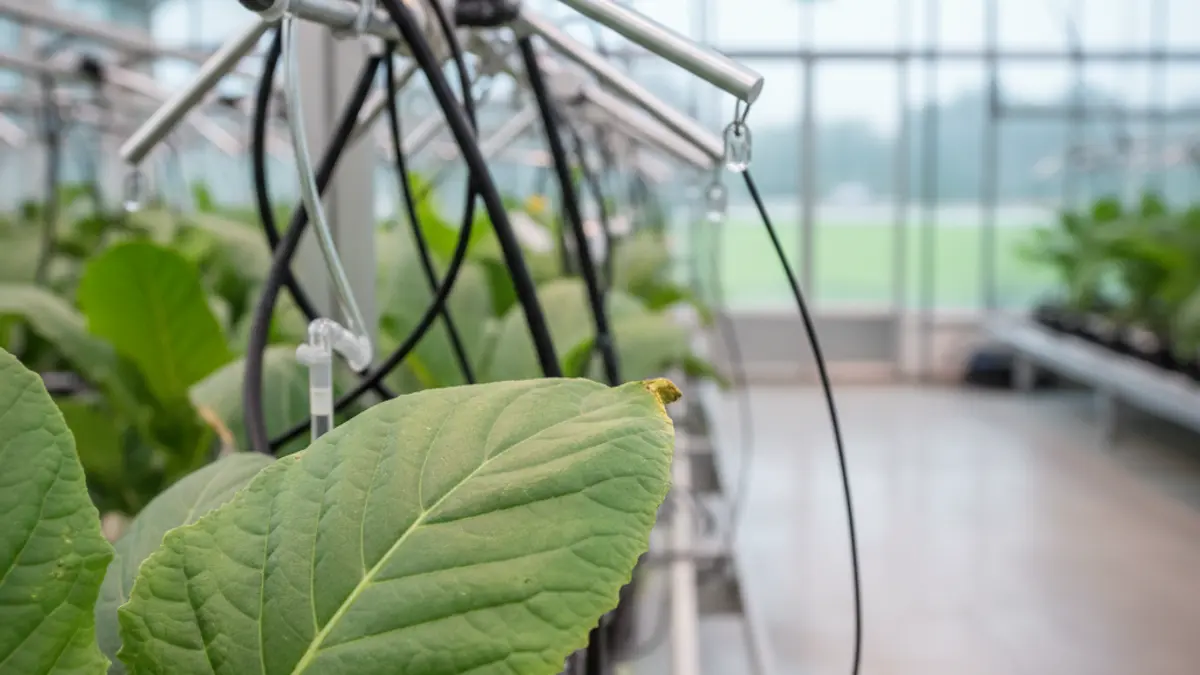
Researchers at the UMH of Elche are working on systems to combat water stress, one of the major challenges in Mediterranean agriculture. A study, presented at the Iberian horticulture conferences organized by the Elche Experimental Station, was led by Professor Antonio Ruiz Canales. This project proposes a technological platform based on the Internet of Things (IoT) and AI to monitor ornamental crops in real-time, integrating sensors that measure temperature, ambient humidity, radiation, CO₂ concentration, substrate humidity, and irrigation/fertigation parameters.
The collected information is transmitted using technologies like 4G and LoRaWAN, and then processed by AI models trained to interpret plant status. The results obtained under real conditions are highly relevant, as the algorithms achieve a success rate exceeding 90% in early detection of plant stress and allow for a reduction of over 20% in water consumption, with a margin of error below 8%.
Other research lines, such as that of Professor Fernando Aragón Rodríguez from the Orihuela Polytechnic School (EPSO) and the CIAGRO institute at UMH, aim to achieve increasingly autonomous facilities. AI will enable working with images, sensors, and environmental data to detect problems before the human eye perceives them, including morphological alterations due to poor irrigation or anticipating pests and diseases. Although implementation is limited by equipment costs and the sector's digitalization level, researchers are confident in progressive adoption as costs decrease and producers see a clear economic return.
From the Elche Agrarian Experimental Station, dependent on the Generalitat, these systems are also viewed as a transformative tool. Its director, Julián Bartual, expects to soon include this computational learning in experimental plots and has already incorporated training courses, especially for crops like table grapes, convinced that digitalization will rapidly change how work is done in the field.