
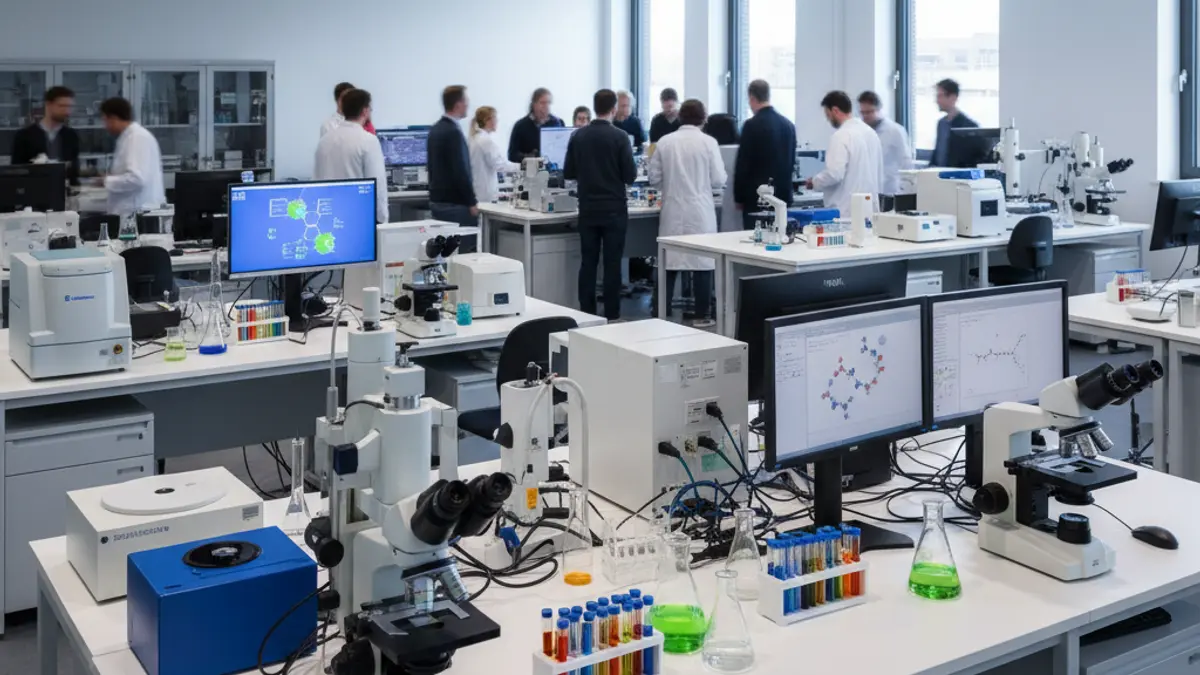
This strategic change at the center, located on the Elche campus, is not merely nominal but responds to a natural evolution to adapt to current societal challenges. The institute, which has had three names throughout its history, now consolidates its identity with a broader vision that integrates health in its global conception.
“"Not just a cosmetic change of name because we got tired of it, but quite the opposite. The institute is adapting to societal changes and needs."
The new orientation is framed within the concept of “one health,” which advocates for the interrelation between human, animal, and environmental health. Traditionally focused on studying the molecular mechanisms of diseases and developing treatments, IDiBE is now expanding its scope towards prevention, seeking to reduce the incidence of pathologies before they appear.
This momentum is also reflected in the growth of its team. By the end of 2025, the center had around 170 people, and it is expected that by 2026 this number will approach 200, thanks to the incorporation of new groups and talent attraction programs. A key milestone has been the integration of a public health specialized group, which will allow addressing projects focused on the impact of medicines on the population and large-scale prevention strategies.
“"We are more focused on the health of people than on the health of patients."
The institute's new structure is articulated around three main departments: molecular biotechnology, preclinical biotechnology (which investigates complex diseases such as tumors, diabetes, or peripheral neuropathies, and the impact of environmental contaminants), and the newly created global or public health department. The latter represents the main qualitative leap, allowing research into how factors such as diet, environment, or lifestyle habits influence the onset of diseases and designing effective preventive measures.