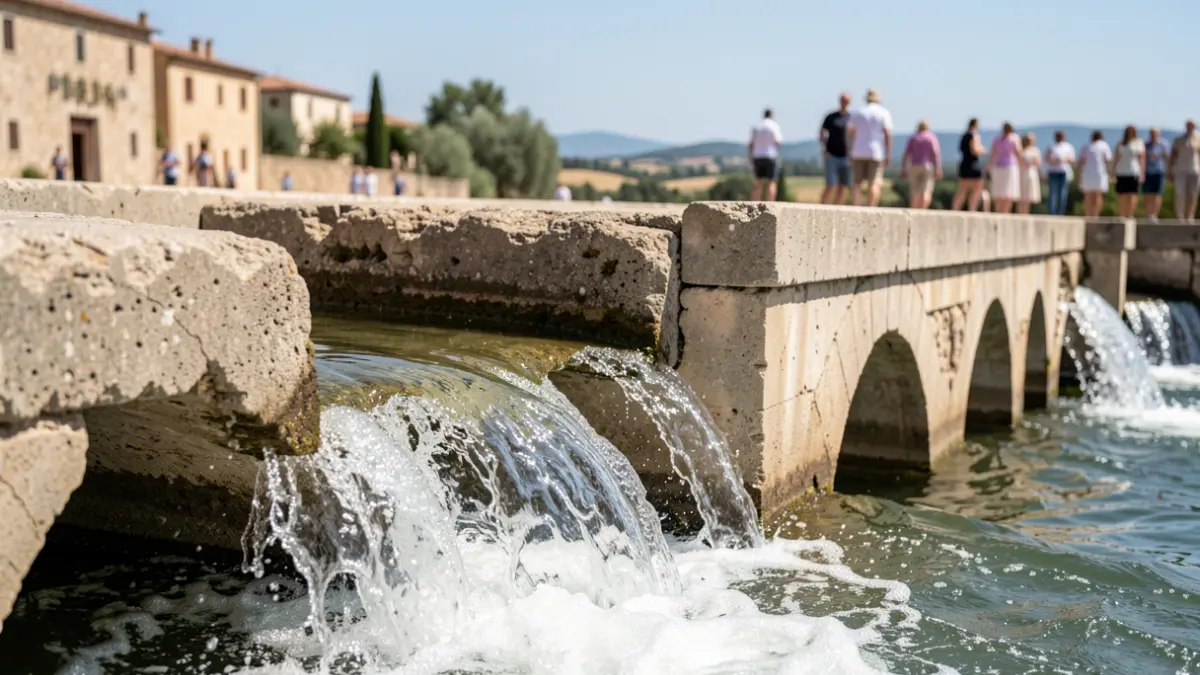
The Tajo-Segura Water Transfer Exploitation Commission authorized this Tuesday the transfer of 120 hm³ for June and July. This figure represents the maximum allowed by current exploitation rules, with 60 hm³ for June and 60 hm³ for July, as the headwater reservoirs, Entrepeñas and Buendía, remain at reserve level 1.
This resolution is supported by the technical report from the Center for Public Works Studies and Experimentation (CEDEX), which advises the commission. The report confirms that the Tajo-Segura system has been at level 1 since March, permitting the maximum monthly transfer stipulated by the rule when reservoirs exceed a combined volume of 1,300 hm³.
As of June 1st, the effective reserves in Entrepeñas and Buendía were 1,479 hm³, exceeding the 1,300 hm³ threshold that keeps the system at level 1. Technical forecasts suggest the transfer will remain at this level through August, with 60 hm³ monthly. From September onwards, a reduction to level 2 is expected, with 27 hm³ monthly.
With this trend, the semester will conclude with a total transferred volume of 261 hm³, of which approximately 25% goes to the Alicante region. Estimated reserves in Entrepeñas and Buendía are projected to be 1,105 hm³.
In the 2025-2026 hydrological year, 315 hm³ have already been authorized, reaching the annual average three months ahead of schedule. As of June 1st, 194.5 hm³ had been sent.
The majority of the transferred water is allocated to agricultural irrigation, but it also ensures urban supply. In the current hydrological year, accumulated consumption remains below reference values. In Alicante, about 34% of the water consumed by major cities comes from the transfer, while desalinated water accounts for over 38%.
The report also highlights that the Tajo-Segura transfer helps sustain the water level in the Tablas de Daimiel protected area, with 1,370 hectares flooded as of June 1st. CEDEX concludes that the system is in a state of hydrological normality.
Paradoxically, this situation of maximum reserves occurs while judicial decisions could alter the exploitation rules. The Supreme Court has upheld the ecological flow rates of the Tajo's hydrological plan, which will necessitate a reduction in stored water availability and future transferable volumes.
For irrigators in the Vega Baja region, the validation of transfers like June's confirms the effectiveness of current exploitation rules, which raised the minimum threshold for transfer. La Pedrera reservoir in Orihuela exceeds 50% capacity, holding 125 hm³, well above its historical average.
Water demand for irrigation has significantly increased in the last two weeks, coinciding with rising temperatures and the need to water citrus crops. The Segura basin, although below 60% capacity, still holds double the average of the last decade.