
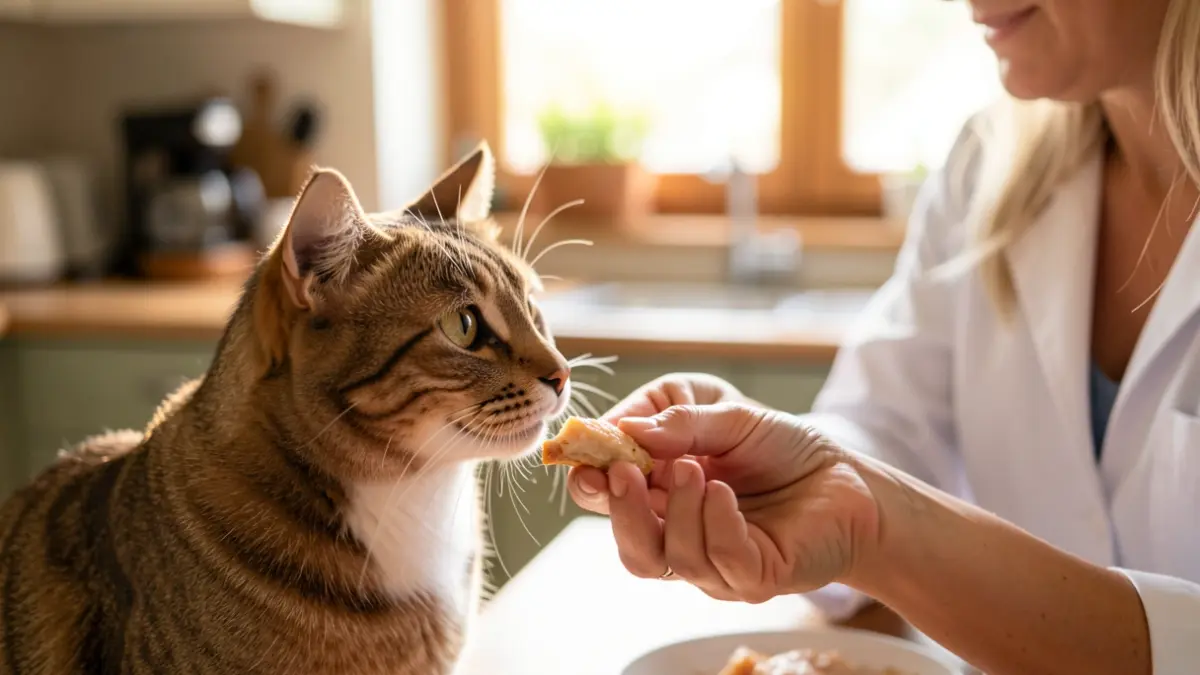
Many cat owners wonder if the foods they prepare for themselves are suitable for their pets. The answer isn't simple, as some human foods can be safe and even function as a small healthy treat, while others can be dangerous. It's essential to know what can be offered, how to prepare it, and in what quantity.
According to Juanjovet, a veterinarian with a large social media following, cats are obligate carnivores, and their main diet should be based on animal protein. Fruits, vegetables, or grains should not replace their usual diet, although some can be given in small amounts as an occasional treat.
Among the surprising foods, banana is an option, but always in small pieces and occasionally, due to its sugar content. This makes it less advisable for cats with diabetes or weight problems. Strawberries and blueberries, rich in antioxidants and vitamins, are also possible, as is watermelon on hot days, always seedless and in reduced quantities. Natural pumpkin, cooked carrots, green beans, peas, oats, or cooked rice are other examples, always in minimal amounts and as a supplement.
Animal-based foods like chicken, turkey, beef, fish, shrimp, or eggs can be good treats, but always cooked, without salt, sauces, or seasonings. Raw eggs are not recommended, and fish should have bones removed. Raw meat should be avoided due to the risk of bacteria, and cooked bones can be dangerous.
The veterinarian reminds us that there are completely forbidden foods for cats, such as grapes, raisins, chocolate, onion, garlic, avocado, alcohol, and products containing xylitol. If ingested, contact a veterinarian quickly.